Ancient Rome, Italy, Mount Vesuvius, Pompeii, Volcanoes

Mount Vesuvius: Volcano Experience No. 1


The skyline of Pompeii. Trivarelli, TGG.

The skyline of Pompeii. TGG.

On Aug. 25, A.D. 79, the cities of Pompeii and Herculaneum were buried, along with many of the inhabitants, underneath layers of lapilli and volcanic material. The lost city of Pompeii was not excavated until Charles of Bourbon, King of Naples, issued the order in 1748.¹ The only recorded witness account of the eruption of Mount Vesuvius is contained in two letters from Pliny the Younger to his friend Tacitus, the Roman historian.

Ruins of Pompeii. Trivarelli, TGG

Ruins of Pompeii. TGG

When the eruption began in the early afternoon on Aug. 24 a large column of volcanic ash had begun shooting into the sky. This opening phase was later coined the Plinian phase. According to Pliny the Younger, his uncle, Pliny the Elder, an admiral in command of the Tyrrhenian fleet stationed at Misenum, sailed the bay of Naples to save others whose only means of escape was by ship. However, the admiral perished. Pliny the Younger recorded that his uncle was likely killed by the “…cinder-laden air that had clogged his air passages and blocked his throat…”² suffocating him to death.

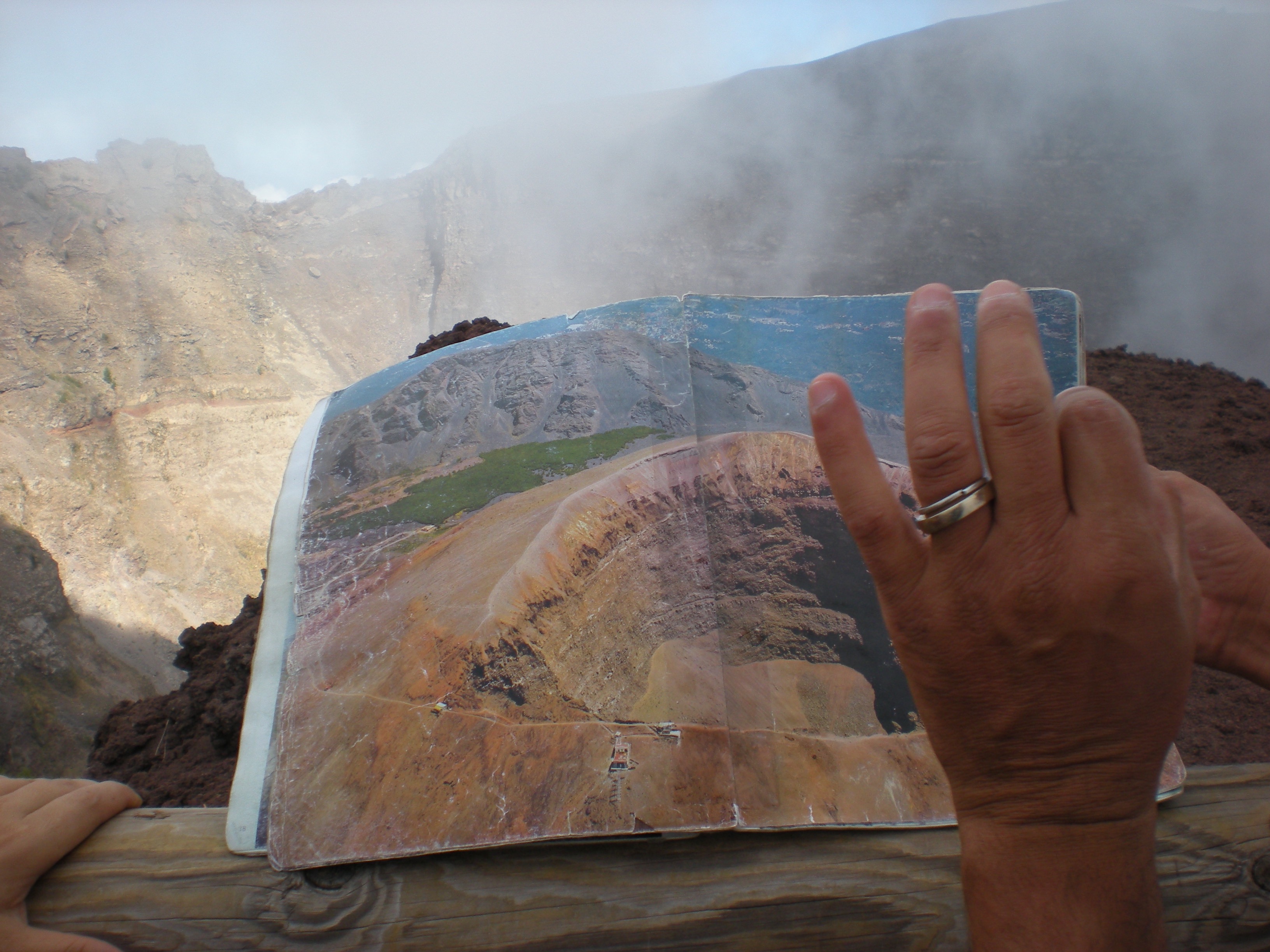
Caldera of Mount Vesuvius. In Lexi Krocks's Anatomy of a Volcano, "a caldera is a large, usually circular depression at the summit of a volcano formed when magma is withdrawn or erupted from a shallow underground magma reservoir." Trivarelli, TGG.

Caldera of Mount Vesuvius. In Lexi Krocks’s Anatomy of a Volcano, “a caldera is a large, usually circular depression at the summit of a volcano formed when magma is withdrawn or erupted from a shallow underground magma reservoir.” TGG.

By Aug. 25 the column of ash had fallen, marking the transitional phase of the eruption from the Plinian to the flow stage. A pyroclastic flow is an avalanche of lava, which can surge down the volcano at speeds greater than 60 miles per hour carrying debris, rocks, incendiary ash, and combustible gases.³ Multiple surges left Pompeii and Herculaneum and the remains of their people buried for nearly seventeen-hundred years.

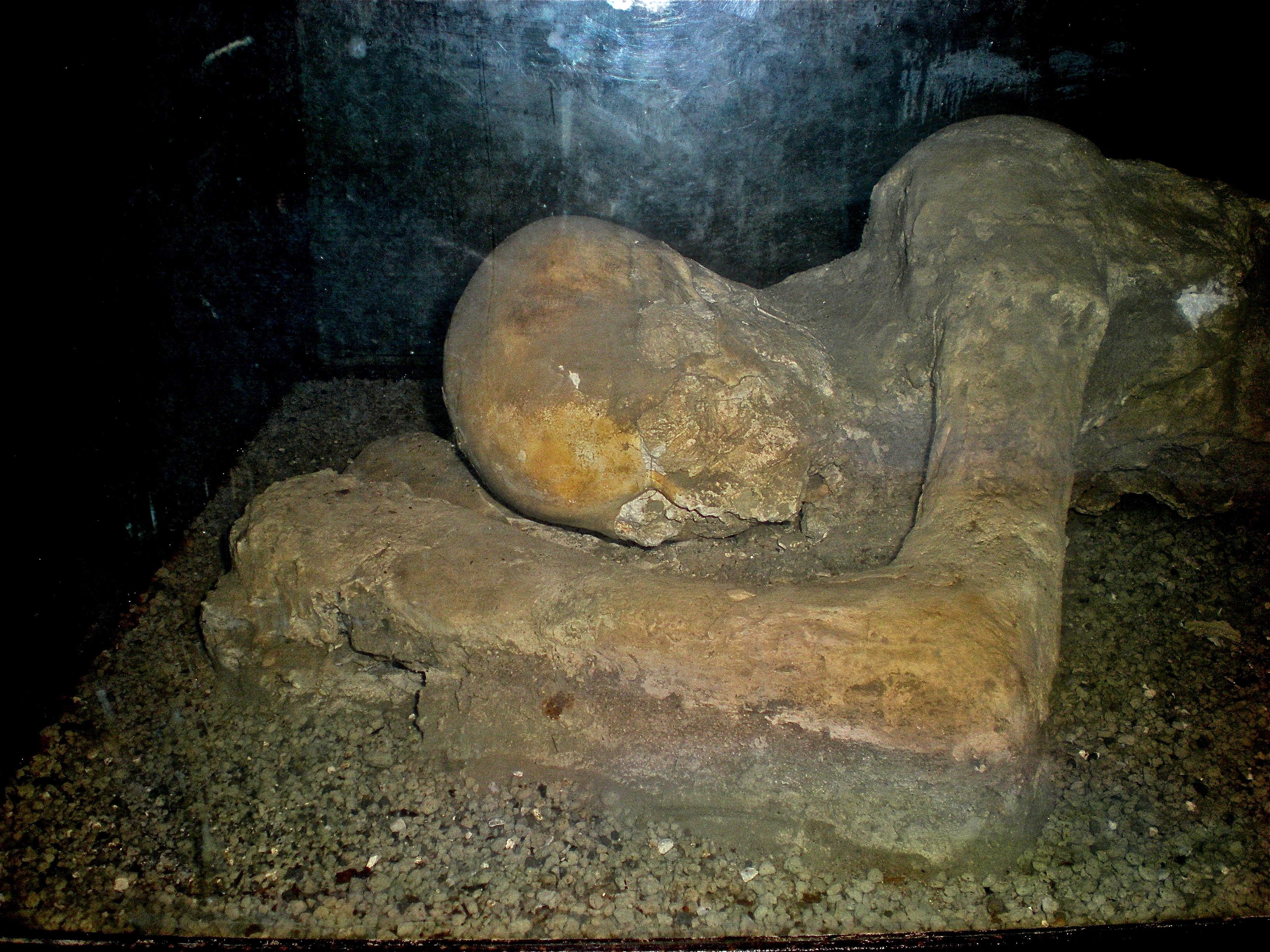
 Plaster mold of a victim of the A.D. 79 eruption of Mount Vesuvius. Trivarelli, TGG.


Plaster mold of a victim of the A.D. 79 eruption of Mount Vesuvius. TGG.

The eruption of A.D. 79 was not the most deadly volcanic eruption in world history, but it has become the most famous. The numerous relics recovered from ancient Rome, from masterful architecture and beautiful mosaics and paintings to the plaster molds of the victims revealing intimate details, such as facial expressions and body positions at the moment of their deaths, makes old Pompeii and a trip to the peak of Mount Vesuvius major tourist attractions. If you plan on visiting the Campania region of Southern Italy, be sure to dedicate no less than two days to the ruins of Pompeii, if not more.


Suggested Readings:

For an entertaining history of the A.D. 79 eruption, a concise, illustrative book called Ashen Sky: The Letters of Piny the Younger on the Eruption of Vesuvius, Illustrated by Barry Moser, written and translated by Benedicte Gilman, published by The J. Paul Getty Museum, Los Angeles.

For a more detailed and authoritative book, Pompeii: The History, Life and Art of the Buried City and Ernesto De Carolis’s Vesuvius AD 79: The Destruction of Pompeii and Herculaneum. 

References:

Pompeii: The History, Life and Art of the Buried City. Edited by Marisa Ranieri Panetta. White Star Publishers, 2004.

2  Ibid.

3 Krock, Lexi. Nova: Anatomy of a Volcano. 2002. http://www.pbs.org/wgbh/nova/earth/volcano-parts.html

Standard
Hogs, Pig Farm

Pig Farmers Maintain Pride in Barn


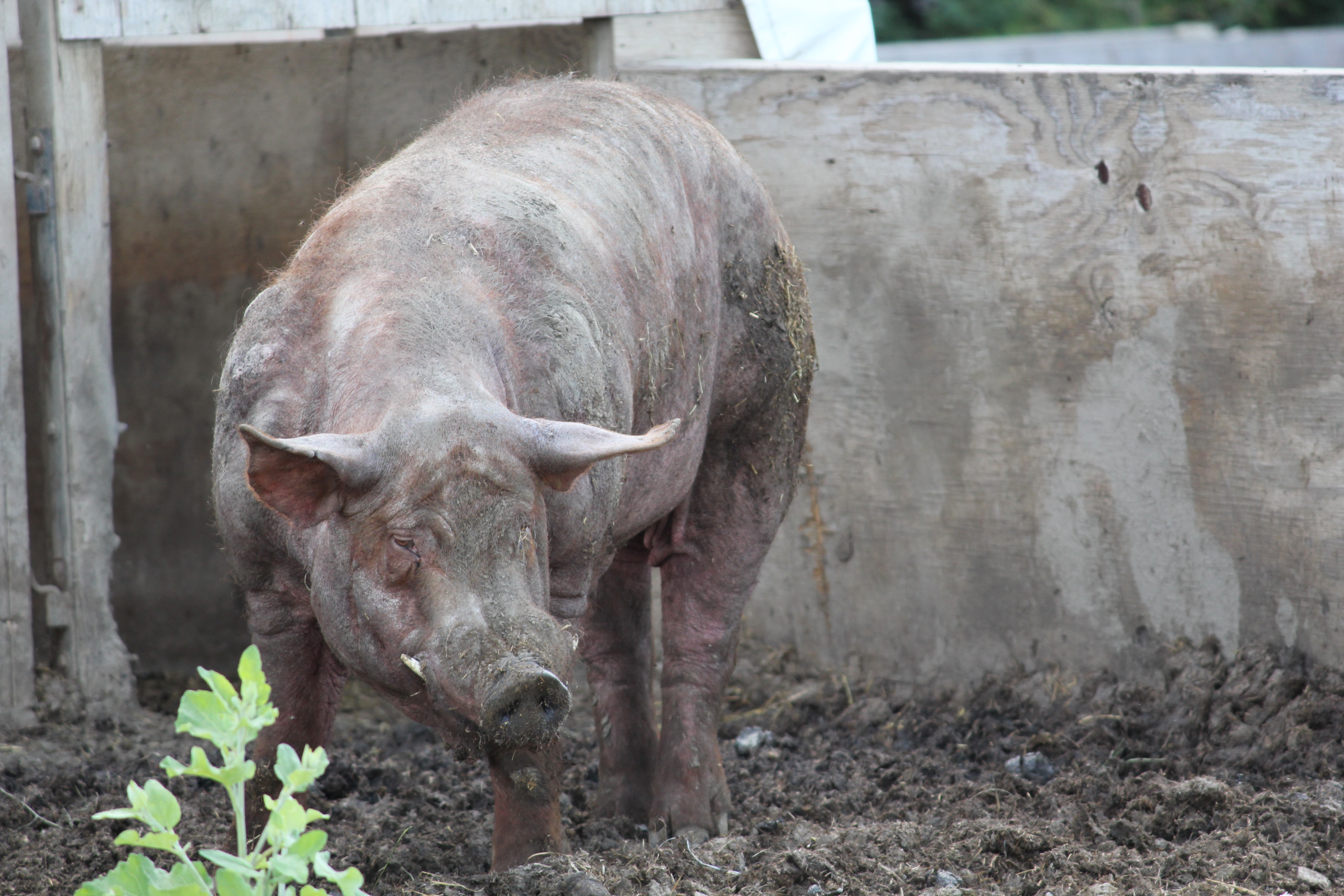
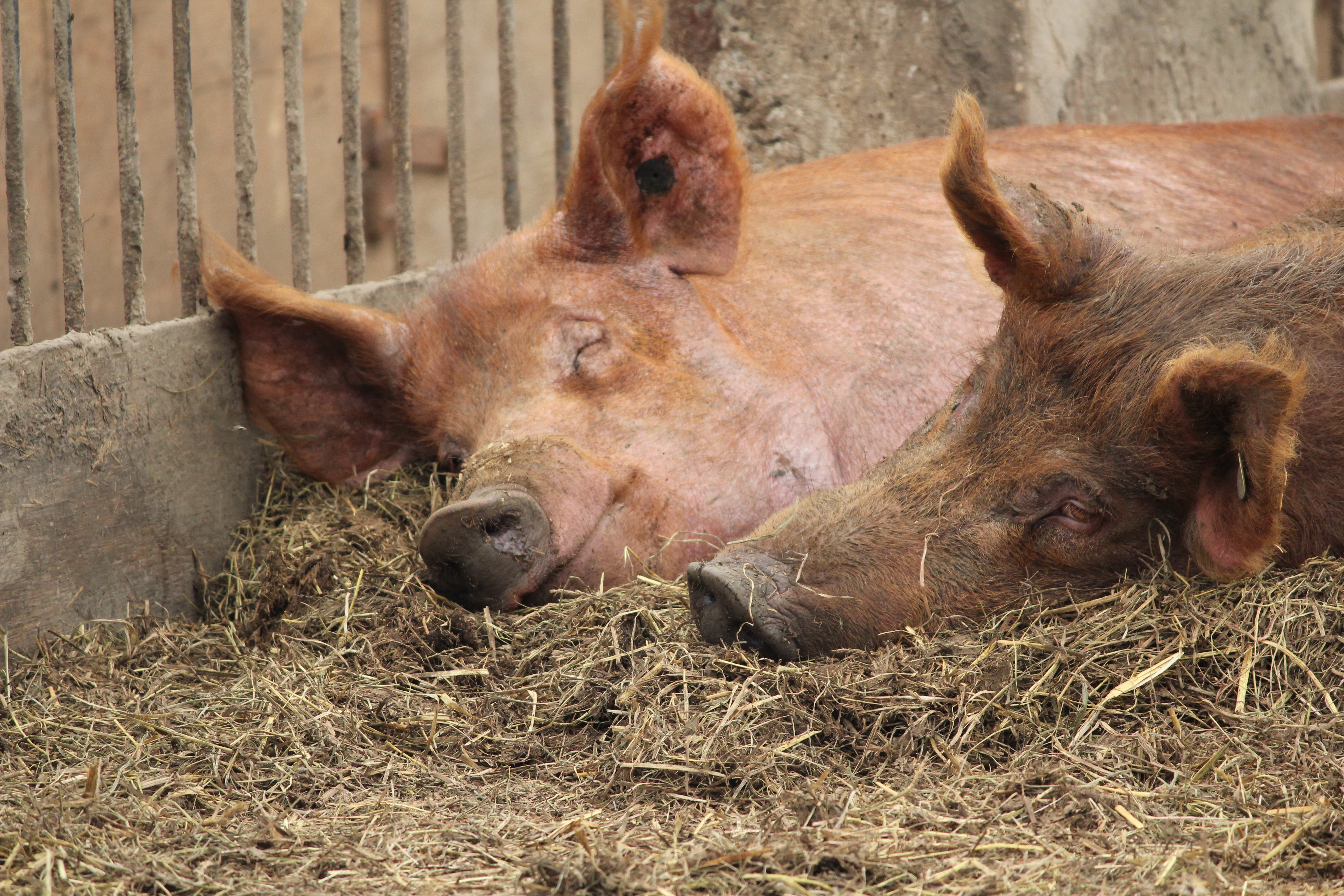
Rodney is a 6-year old Tamworth bought from the High Meadows Farm in Delhi, NY. As a breeding boar, he will live out his days in the barn. Trivarelli, TGG.

Rodney is a 6-year old Tamworth bought from the High Meadows Farm in Delhi, NY. As a breeding boar, he will live out his days in the barn. TGG.

PERTH COUNTY, ONTARIO—Fred de Martines recalled a visitor to his family’s pig farm who anticipated horror and abuse. According to Fred, she actually had nightmares and expected to see “blood on the wall.” Once inside the farm, she was relieved to see that her expectations were unmet.

Fred is often dismayed about the bad reputation that pig farmers have in the public eye. The misinformed opinion that all farm-raised pigs suffer a terrible existence is in his opinion: “nonsense.” To educate people on how the de Martines family run their farm, they built a viewing room so visitors can see how their hogs live.

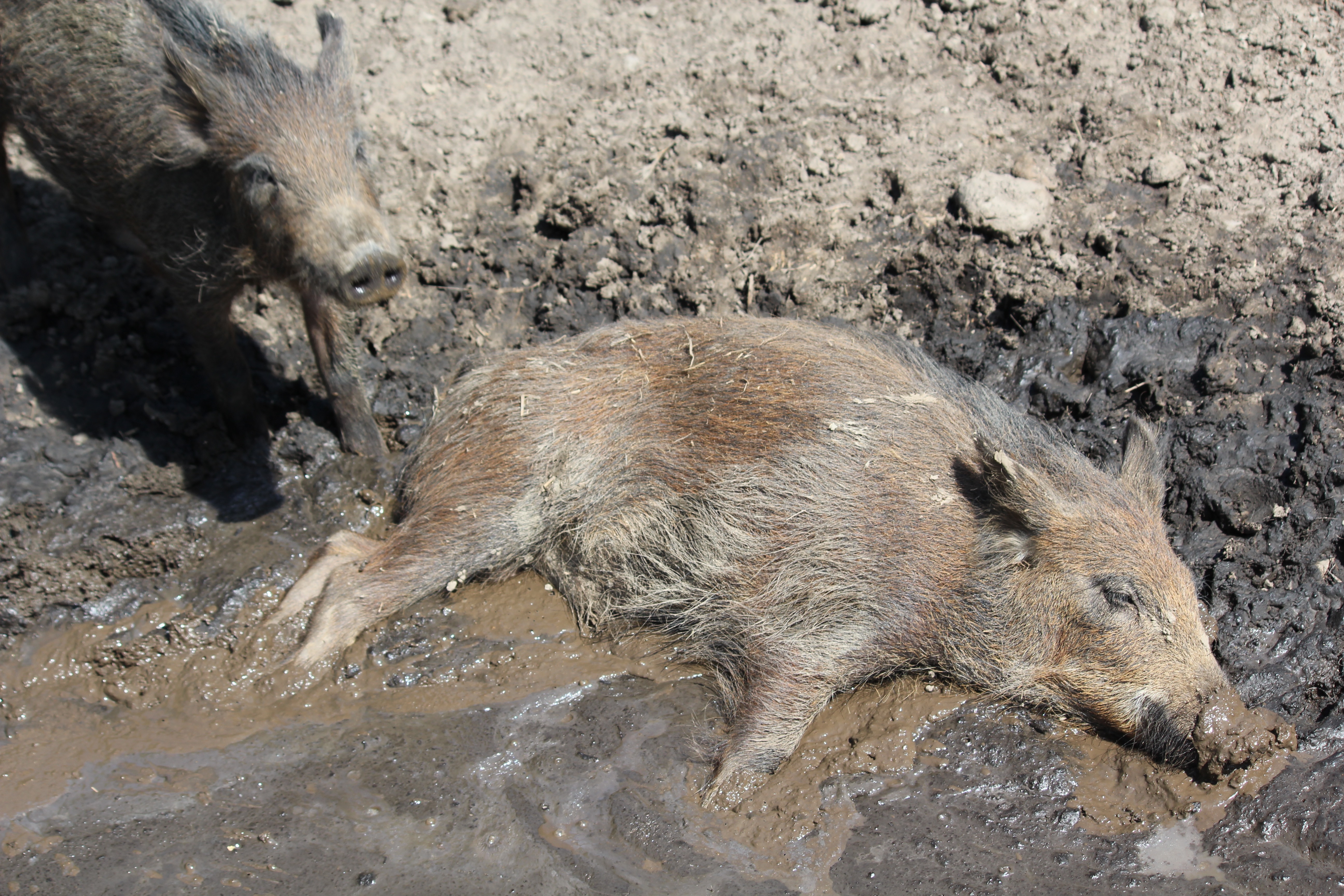
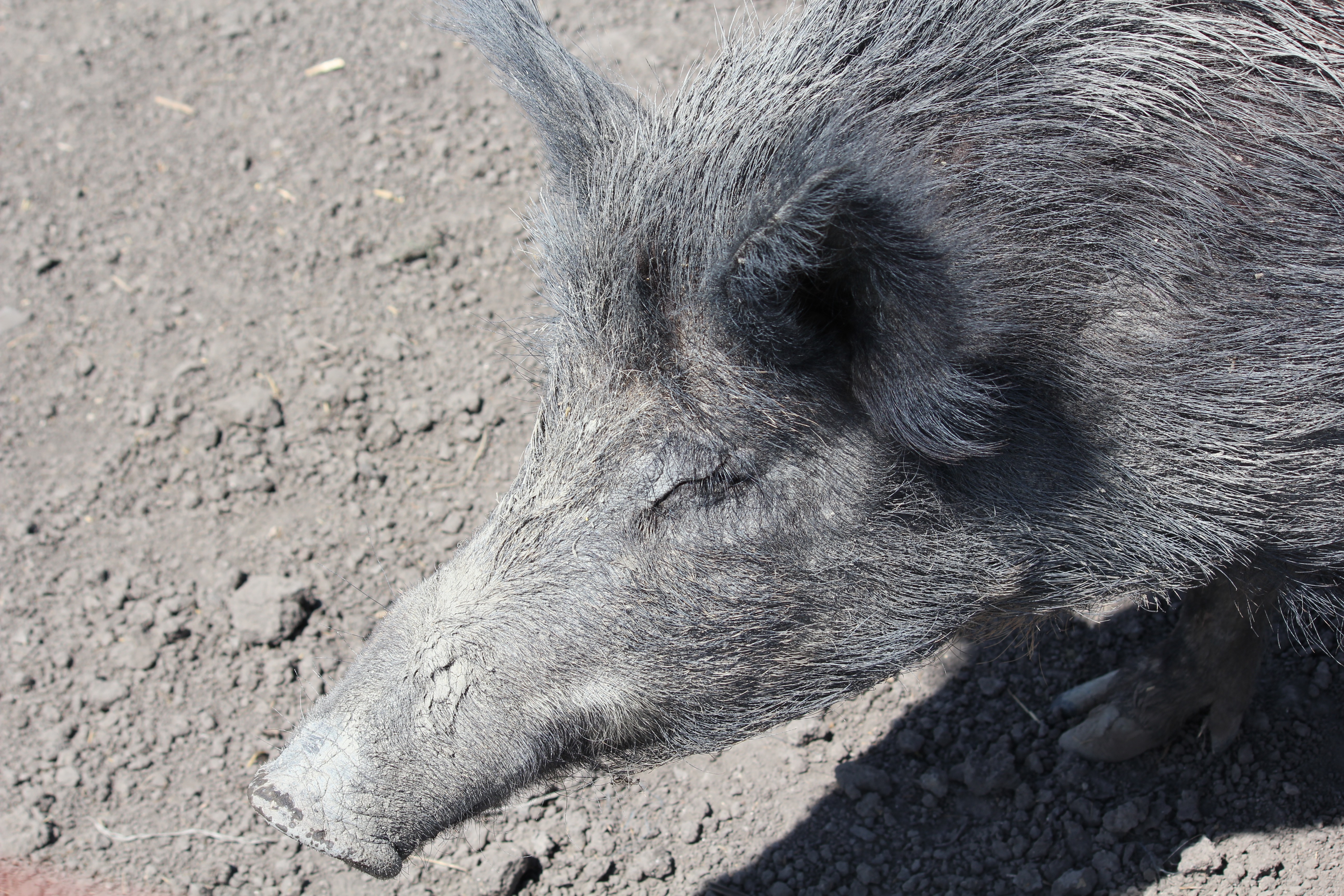
A European Wild Boar piglet stays cool in the mud. Did you know that pigs do not have sweat glands and would die of heat stroke if they didn't have mud pools to keep cool? Otherwise, hogs prefer to be clean. Trivarelli, TGG.

A European Wild Boar piglet stays cool in the mud. Did you know that pigs do not have sweat glands and would die of heat stroke if they didn’t have mud pools to keep cool? Otherwise, hogs prefer to be clean. TGG.

Fred said that he and his family are proud to raise their pigs in a humane, dignified way. Still, there exists a duality of purpose in raising animals humanely.

One, demand for high quality meat. And two, the respect of animals or the prevention of cruelty of animals. In his opinion, the two go together. Keeping the pigs happy is best for the farmers, the consumers, and the pigs.

When pigs are stressed their growth is stunted, and so the process of getting them to weight is also slowed. To exemplify this, Fred notes that the hogs don’t grow as fast during the summer when they endure more stress in the extreme heat. Consequently, the market receives less pork during the hotter periods.

Although stress cannot be avoided, there is necessary and unnecessary stress. Fred said that, like man, “there are bullies in the playground, and there are bullies in the barn.” When one hog intimidates others, Fred separates the bully so the herd doesn’t experience unneeded stress. Yet, like people, pigs are social and prefer to not be alone. If a hog needs to be separated from the pack because of misbehavior or sickness, it cannot be subjected to solitary confinement.

Hay is an important part of the de Martines's pigs' diet. It's good for their stomachs, providing fiber and preventing ulcers. It also supplements the pasture-feed during the long winter months when there is no pasture to graze on. Trivarelli, TGG.

Hay is an important part of the de Martines’s pigs’ diet. It’s good for their stomachs, providing fiber and preventing ulcers. It also supplements the pasture-feed during the long winter months when there is no pasture to graze on. TGG.

“They need companionship whether they’re bullies or not,” explained Fred. In such a scenario the segregated pig must have a suitable partner so that even the bully does not become stressed from isolation.

The necessary, unavoidable stress that eventually comes is reduced as much as possible for the de Martines’s hogs. The pigs are delivered by trailer to the abattoir on late Saturday afternoon. Because moving is stressful, Fred ensures they are given about a day and a half to settle into their new barn, which is ventilated and provides full access to drinking water. Keeping the hogs unstressed up to the moment of the kill ensures that the meat is more tender, and thus, a higher quality product, but also maintains as little cruelty to the animals as possible.

The De Martines family provides several elements on the farm that let the pigs live a stress-free, healthy lifestyle. They offer open space for grazing, shelter for shade, mud holes to keep cool, showers to keep clean, and faucets to drink water.

The Tamworth, originally called "the Irish Grazer," was imported from Ireland to England by Sir Robert Peel in the early 19th century.¹ This breed is marked by its reddish brown skin and erect ears. Trivarelli, TGG.

The Tamworth, originally called “the Irish Grazer,” was imported from Ireland to England by Sir Robert Peel in the early 19th century.¹ This breed is marked by its reddish brown skin and erect ears. TGG.

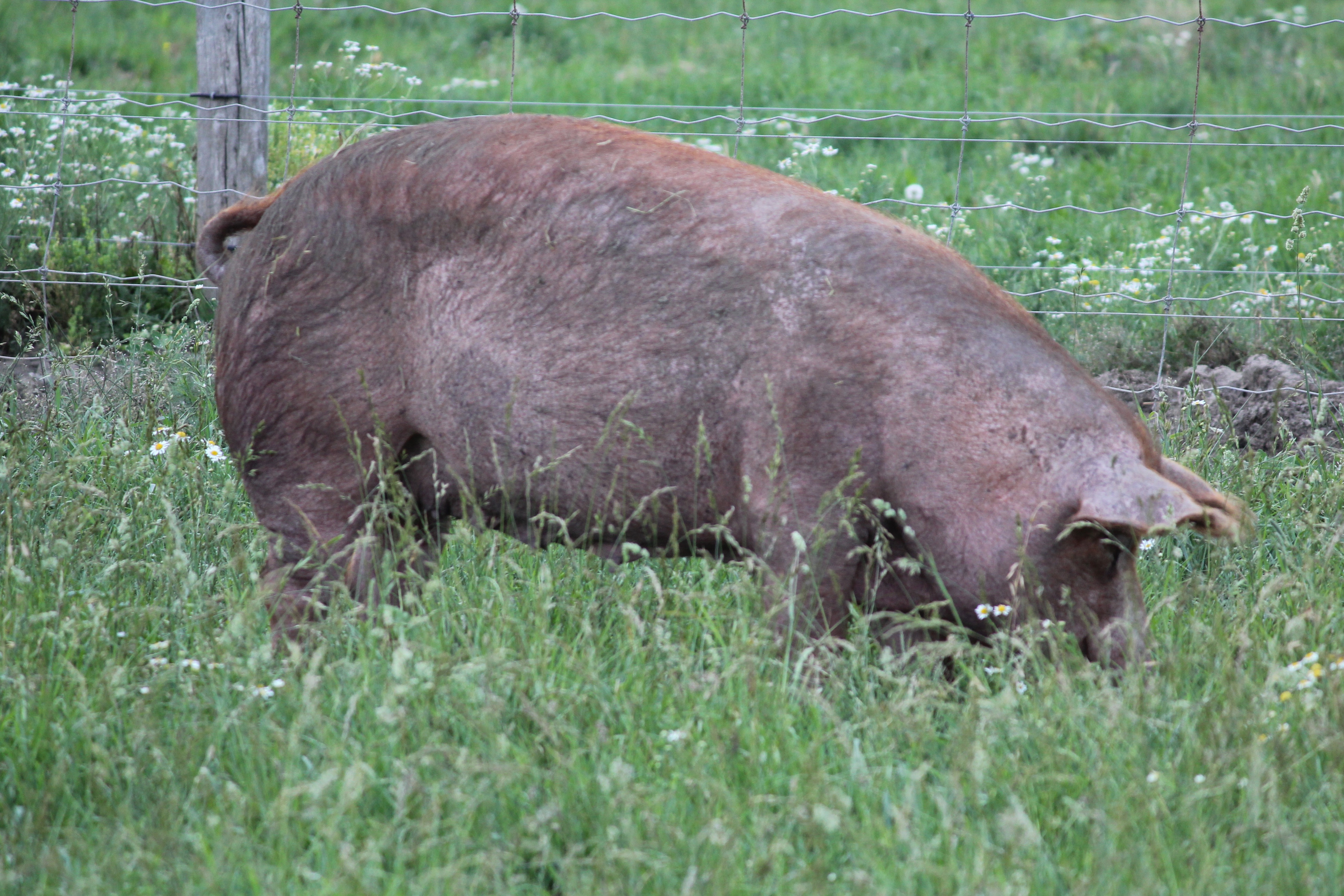
Also, the pigs eat a healthful diet of barley, corn, oats, wheat, and hay. The heritage breeds, the Tamworth, Berkshire, and European Wild Boar, are pasture-fed, so hay is necessary because there is no pasture in the winter. Yet, they feed the heritage breeds hay yearlong because it is good for their stomachs. It provides fiber, which helps prevent ulcers and keeps them regular.

“Pigs love hay,” said Fred. “If given the choice, pigs will eat hay instead of grass.”They even like lounging on it. The family makes their hay with grass, alfalfa, and clover.

The commodity pigs, which are less expensive than the heritage breeds, eat more corn than barley because they are raised for speed. Corn causes pigs to grow faster than the other feeds do.The commodity pigs provide the basic pork that is sold to the average consumer at a lower price. The heritage breeds are more expensive and eat mainly barley and less corn.

The Tamworth, originally called "the Irish Grazer," was imported from Ireland to England by Sir Robert Peel in the early 19th century.¹ This breed is marked by its reddish brown skin and erect ears. Trivarelli, TGG.

The Tamworth, originally called “the Irish Grazer,” was imported from Ireland to England by Sir Robert Peel in the early 19th century.¹ This breed is marked by its reddish brown skin and erect ears. TGG.

Also, the heritage breeds take 50% longer to grow than the commodity pigs, not only because they eat less corn, but according to Fred, “heritage breeds don’t have the genetic makeup to grow as fast as non-heritage pigs.” They have been living the same way for centuries—of course, this is what makes them heritage breeds. These breeds can be fed corn to grow quicker, but the final product is, in Fred’s opinion, a much lower quality.

The de Martines family farm is not organic because they spray their fields for weed control. Fred explained that they do not have time to hoe thousands of weeds that grow. However, they do not use GMO seeds for their crops, and they do not use hormones, antibiotics, or animal byproducts in the raising of their pigs.

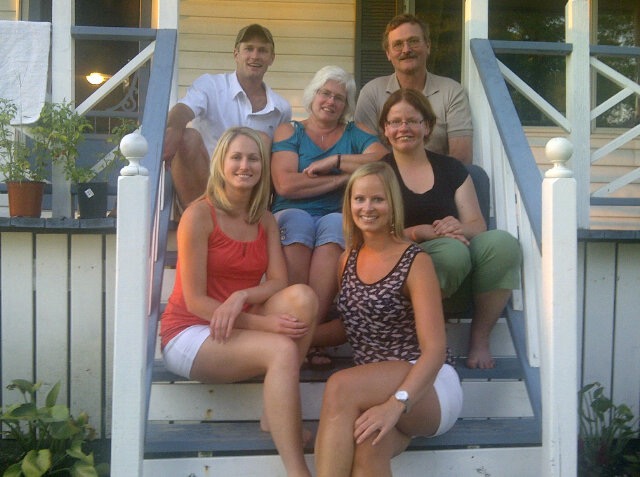
The de Martines Family: In the middle is Ingrid, counterclockwise from upper right is Fred, their son, Mark, and their daughters, Bianca, Rachel, and Yvonne. Mark and Yvonne also work on the farm. Originally from Deurne, Netherlands, Fred and Ingrid moved to Ontario in 1979. Photograph provided by Fred and Ingrid.

The de Martines Family: In the middle is Ingrid, counterclockwise from upper right is Fred, their son, Mark, and their daughters, Bianca, Rachel, and Yvonne. Mark and Yvonne also work on the farm. Originally from Deurne, Netherlands, Fred and Ingrid moved to Ontario in 1979. Photograph provided by Fred and Ingrid.

The family chooses to keep their sales within the Province of Ontario. This helps them maintain their farm at a manageable size, and allows them to run their operation in a profitable yet humane fashion.

If visiting Toronto, you can try their pork at   The Black Hoof restaurant.

If you would like a tour of the farm, call Fred and Ingrid at (519) 393-6846 or visit their website for more information:

Perth Pork Products ltd.


References

1 Rath, Sara. The Complete Pig: An Entertaining History of Pigs. Voyageur Press, 2004.

2 Ibid.

Standard
Burgers, Philly foods, Whiskey Bar

Burger of the Highest Order—A Review of Chef Jose Garces’s Village Whiskey


PHILADELPHIA—The Village Whiskey’s burger received publicity and praise before. Yet there’s something low-key about this restaurant. I’ve met more than a few locals who heard of it but have yet to visit. I’m going to put it out there: Village Whiskey’s burger is probably the best in existence.

The Burger

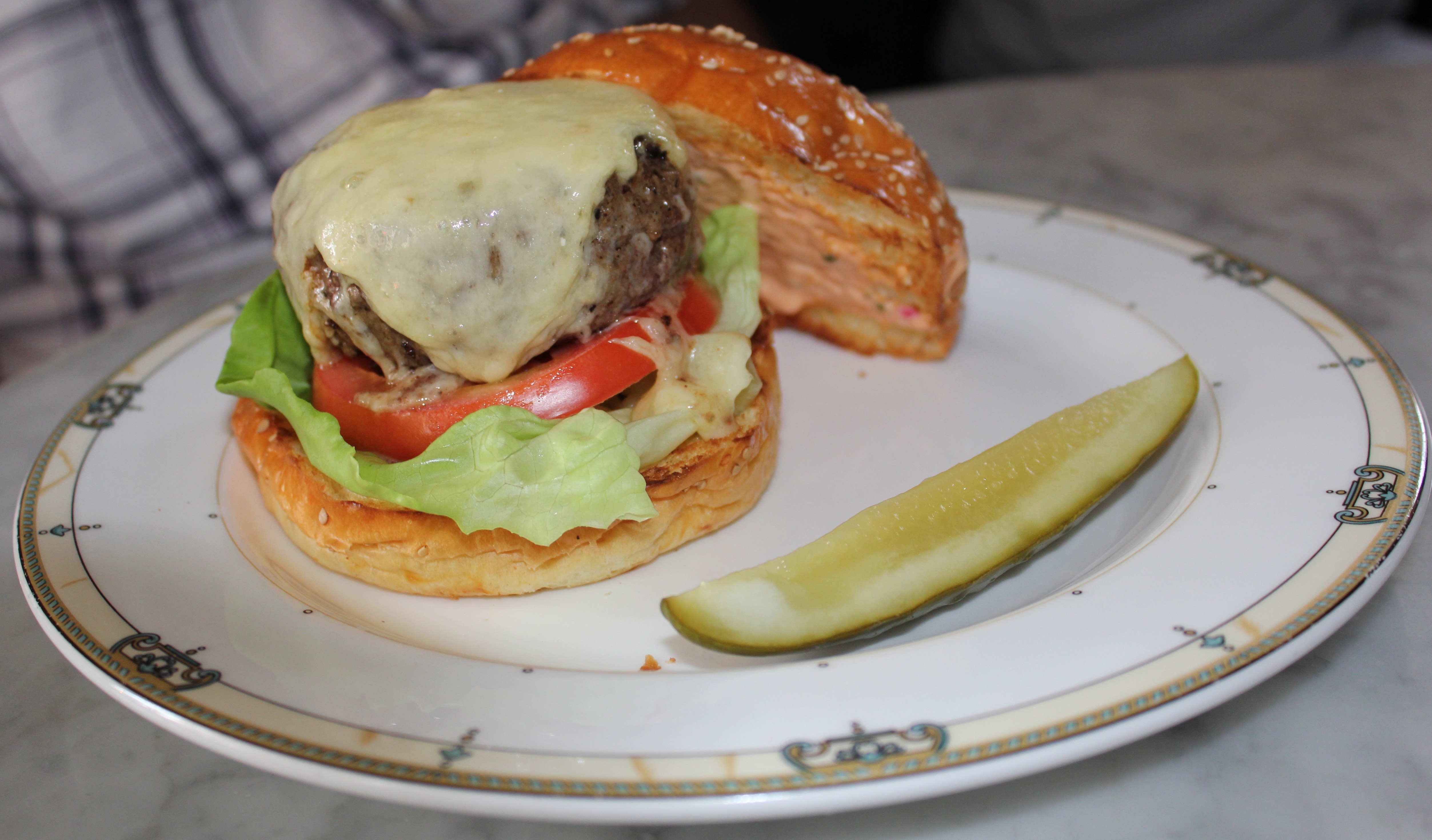
I hate to speak with such superlative; let me soften my tone—Village Whiskey’s burger is probably the best in existence. Their burger is so good, it doesn’t need cheese. That’s a good test for a burger.

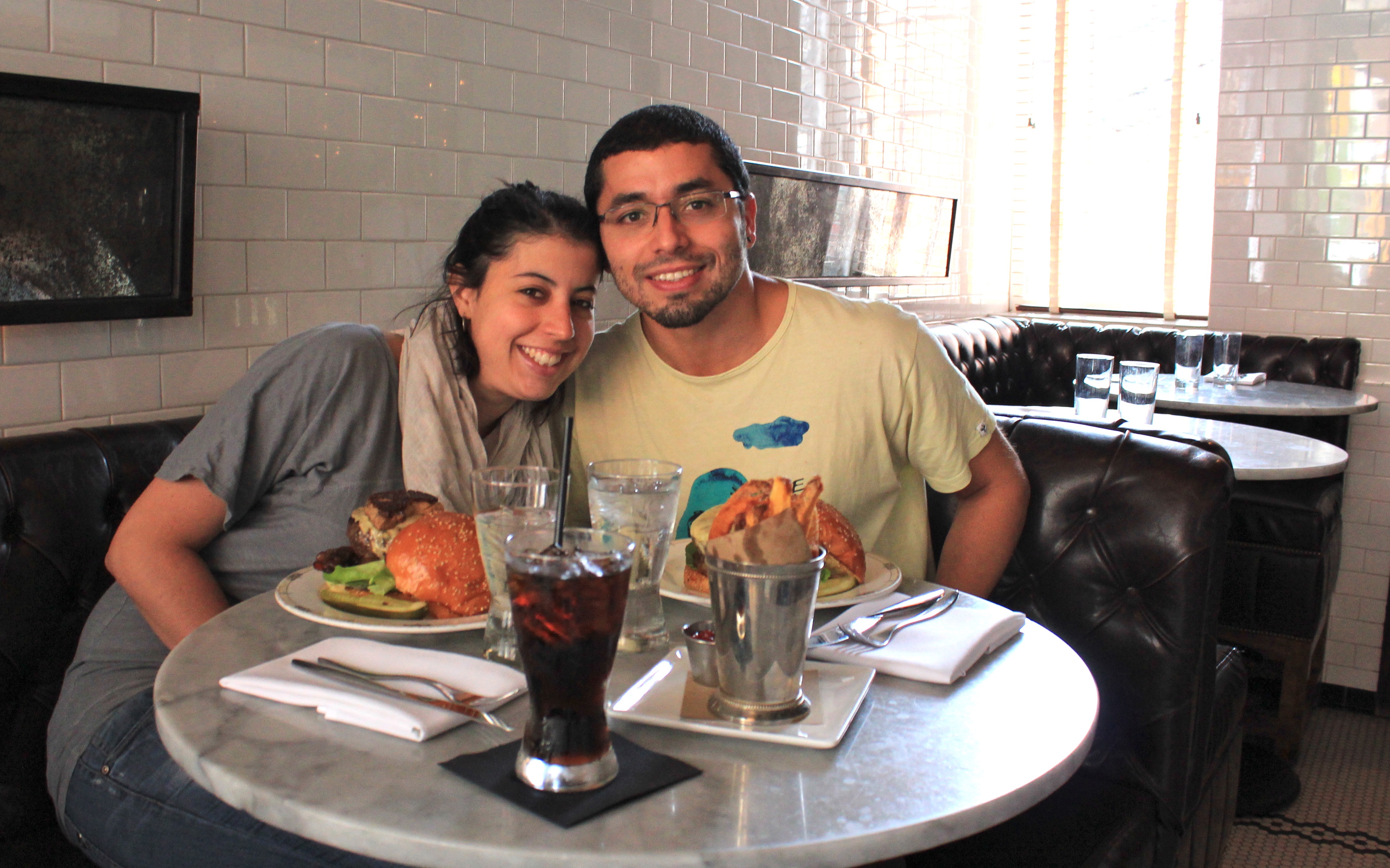
The Village Burger is an 8 oz patty served with fresh Boston bibb lettuce, tomato, and house-made Thousand Island dressing. The burger is served on a Pain au lait sesame roll. Trivarelli, TGG

The Village Burger is an 8 oz patty served with fresh Boston bibb lettuce, tomato, and house-made Thousand Island dressing. The burger is served on a Pain au lait sesame roll. TGG.

I asked the Chef du Cuisine, Yun Fuentes, if the Thousand Island dressing, which they put on the Village Burger, was really house-made. He said it was. His speech and gestures showed subtle signs of excitement, which is the mark of a person who is passionate about what he does. He said they make their own mayonnaise and add chopped fresh olives, capers, red bell peppers, onions, and chives. Then they mix the ingredients with ketchup and smoked tomato compote. They used to include eggs in the dressing recipe but no longer do.

According to Fuentes, their burger is part sirloin, chuck and chuck eye, mixed with fat from Kobe beef. The Village Whiskey is owned by the Garces Restaurant Group. They use a grass-fed beef bought from a farm in Maine.

What I know is what I taste. As I finished the burger, I yearned for more. The burger left a lasting savory taste in my mouth. It’s moist on the inside, slightly crispy on the outside and is perfectly seasoned with salt. Additionally, the burger is not as heavy as it looks. I was not stuffed after eating the burger, just extremely satisfied.


The Fries

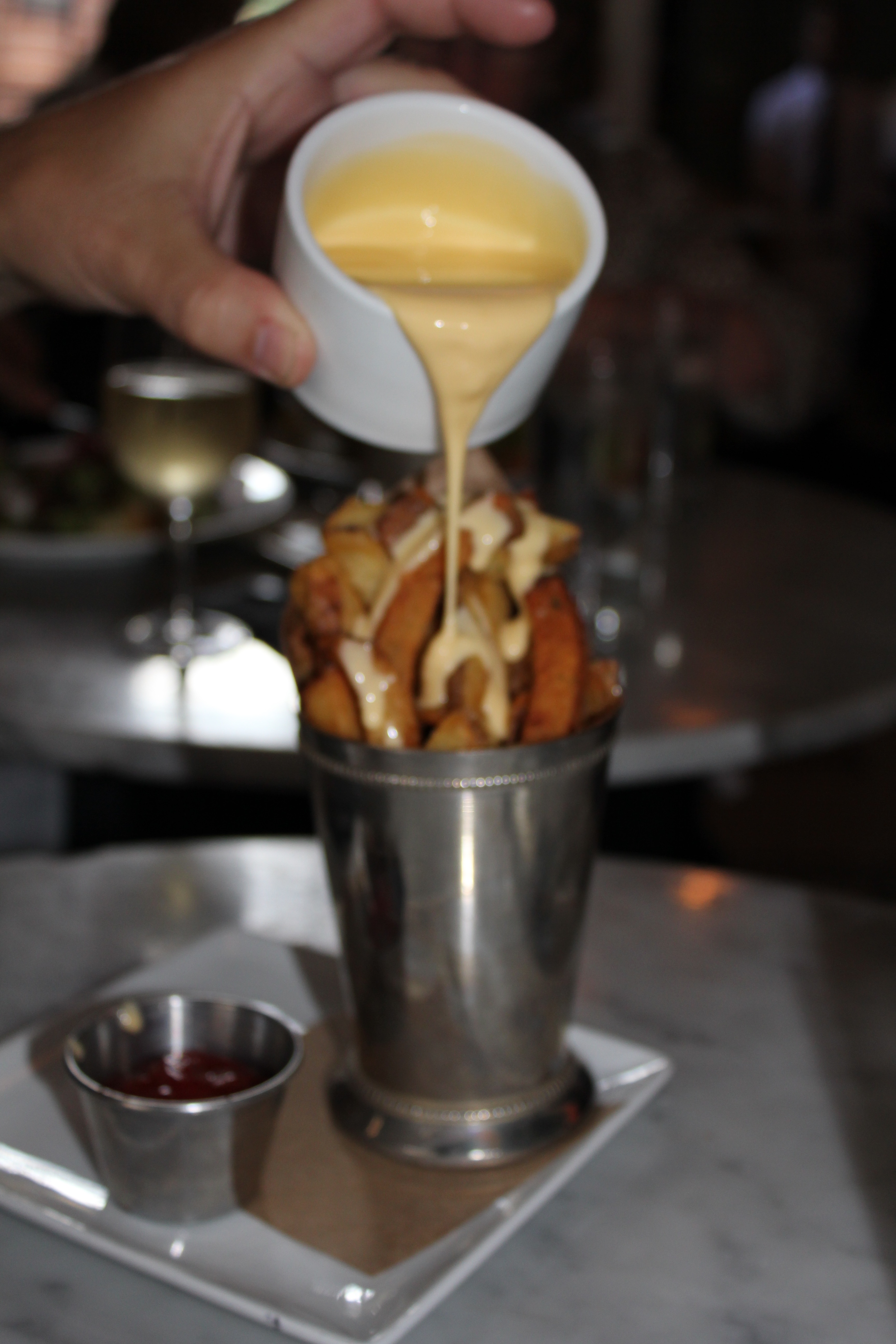
Duck Fat French Fries with Sly Fox cheddar sauce. Trivarelli, TGG

Duck Fat French Fries with Sly Fox cheddar sauce. TGG.

For an additional $2.00 you can have them served with melted cheese. According to waiter Trey Shields, the cheese is made from a 3-year aged New York cheddar, heavy cream, a Sly Fox wheat beer, and roasted garlic.

While I awaited seating on my third visit to the Village Whiskey, I spoke with the host, Janine.

She encouraged me to try the cheese fries. I complained that the cheese was lacking something, although I had no idea what.


The Wiz

The melted cheese provided a classic compliment to these delicious French fries. TGG.

When I had first tried the Duck Fat French Fries, I dipped the fries into the cup of cheese and was underwhelmed.

On my second attempt I stared at this beautiful display of food and wondered why I didn’t appreciate something that looks so good. Then I realized that Pat’s Steaks and Geno’s Steaks pour the cheese on top of their fries.

The difference between dipping the fries into the cheese and pouring them on top was crucial. The latter created a delicious compliment.

I enjoyed the melted cheese so much, by the time I had eaten all the fries, I found myself spooning the cheese as if it were a a tasty soup.


The Variant

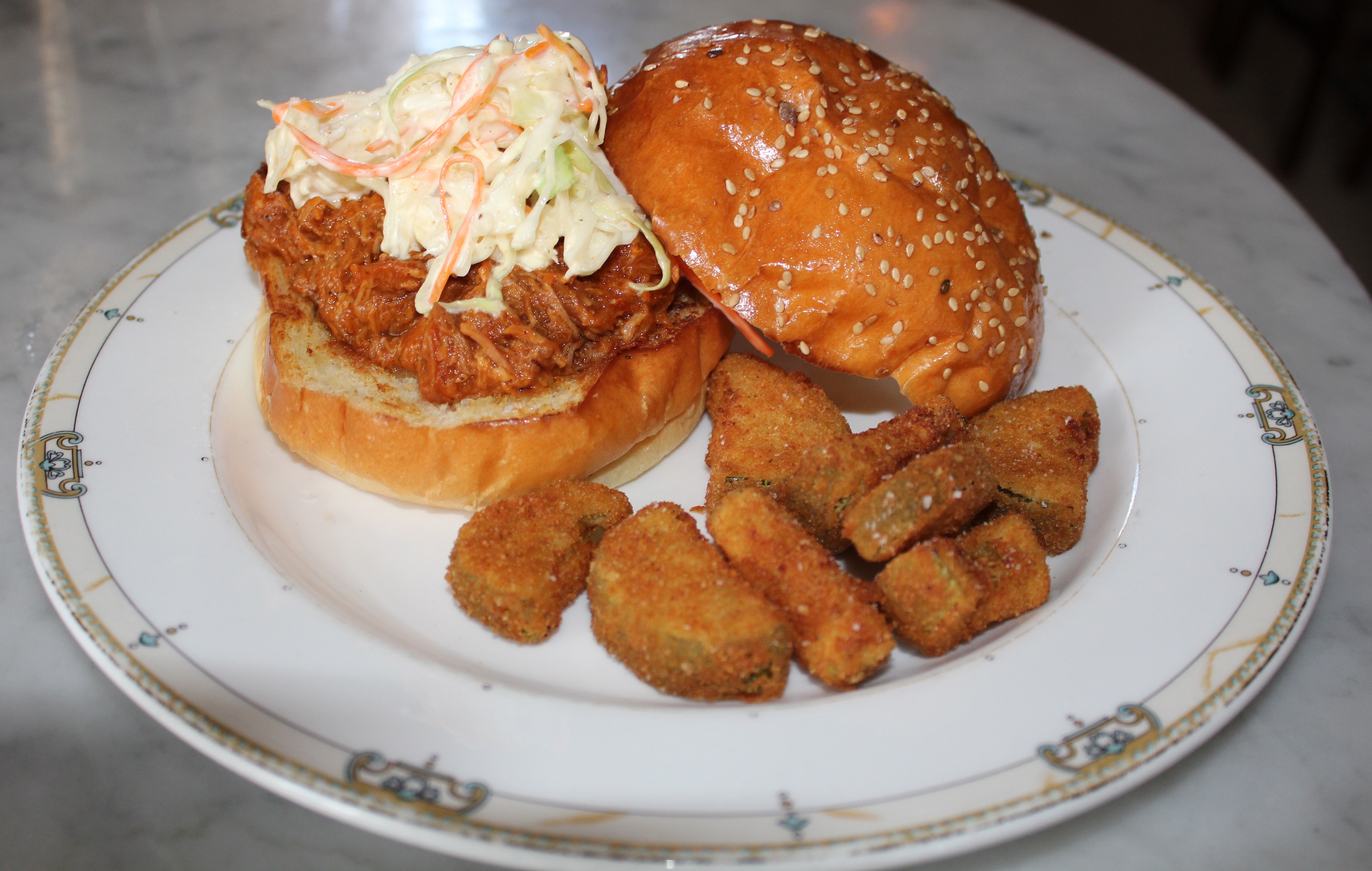
The BBQ Pork Sammy, made from pulled pork shoulder served with fried pickles on the side.This sandwich is really good but nothing beats the burger. Trivarelli, TGG.

The BBQ Pork Sammy, made from pulled pork shoulder served with fried pickles on the side.This sandwich is really good but nothing beats the burger. TGG.

On my second visit to the Village Whiskey I sat at the bar next to a man named Sean O’Halloran. He was a friendly guy from South Jersey who ordered a drink called the Painkiller. He had strong opinions about food, and we briefly exchanged a few thoughts.

He ordered the BBQ Pork Sammy, a sandwich made with pulled pork shoulder, Whiskey BBQ sauce with coleslaw on top and fried pickles on the side. His companion ordered the Kentucky Hot Brown, a sandwich with sliced turkey, smoked bacon, and Mornay sauce served on a toasted brioche.


The Cocktail

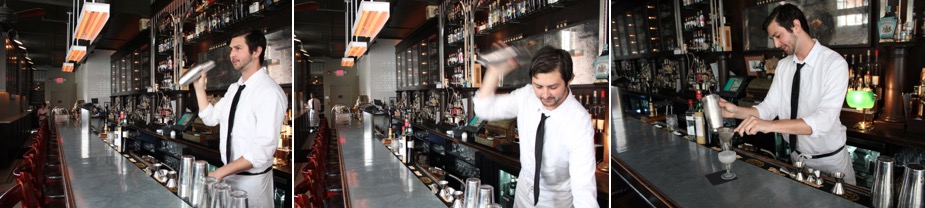
Village Whiskey bartender, John Borror, mixes an Aviation. According to Craig Bridger in his story Aviation: Drink of the Week in www.AskMen.com, the Aviation is "...like the martini's flashy younger brother." Trivarelli, TGG.

Village Whiskey bartender, John Borror, mixes an Aviation. According to Craig Bridger in his story Aviation: Drink of the Week in http://www.AskMen.com, the Aviation is “…like the martini’s flashy younger brother.” TGG.


The Aviation. I didn't try it, but the Painkiller was pretty good. Trivarelli, TGG.

The Aviation. I didn’t try it, but the Painkiller was pretty good. TGG.


The People, the Atmosphere

O’Halloran was not only kind enough to introduce me to the Painkiller but had later informed me of his opinions about the Village Whiskey food. He said the BBQ Pork Sammy was “awesome.” He thought the pork was “nice and tender, meaty with a little bit of smokiness.”

More on the Sammy from O’Halloran: He said the BBQ sauce was “creamy” but “typical.” I agree. It’s tough to make a BBQ Pulled Pork unique. The Village Whiskey puts the coleslaw on top, which adds some diversity in flavor and a pleasant contrast of hot and cold. The sesame bun, also, is a great compliment to this and any of their sandwiches. The bun is soft, light, fluffy and tasty.

Daniel and Marian on vacation from Spain found the right spot for burgers. Marian had the Whiskey King, a burger with maple bourbon-glazed cipollini onions, Rogue bleu cheese, applewood bacon, and foie gras. Be aware: this burger costs $26.00. Trivarelli, TGG.

Daniel and Marian on vacation from Spain found the right spot for burgers. Marian had the Whiskey King, a burger with maple bourbon-glazed cipollini onions, Rogue bleu cheese, applewood bacon, and foie gras. Be aware: this burger costs $26.00. TGG.

Gillian L. Wakely, originally from Boston, England (the original Boston) and her friend Susan, also from Boston—the one we are more familiar with—have been living in Philadelphia for about 40 years. They eat at Village Whiskey about once a month. Susan enjoys the establishment because the environment is great and the clientele is diverse. Their favorite is the Village Burger; we have something in common. The Village Burger provided the motivation for this story and perhaps the inspiration for having children some day; so, they too, can experience something immensely delicious.

The Village Whiskey’s environment is tight but very comfortable and classy. The bar draws a large crowd at lunchtime; if you can’t get there early, I’d suggest waiting till 1:30 p.m. Even if you have to wait to be seated, it’s a wait well worth it.

The Village Whiskey is located at 118 S. 20th St. (at corner of Sansom and 20th streets) For more information see their website at http://villagewhiskey.com/.

Standard
Butchery, Italian American, Philly's Italian Market

A Wedding in Italy Leads to Discovery in South Philly


D'Angelo Bros.' pancetta, buffalo and wild boar prosciuttos, lardo, and wild boar salami.

D’Angelo Bros.’ pancetta, buffalo and wild boar prosciuttos, lardo, and wild boar salami. TGG.

PHILADELPHIA—In September I had the pleasure of attending a wedding in a small town called Castiglione del Lago in Italy’s Umbria region. Since I returned, I’ve been terribly fixated on Italian culture. Appeasing my desire to relive the vacation, I reproduce the experiences by drinking espresso on East Passyunk Avenue, listening to Mike Patton’s Mondo Cane album, and shopping for authentic Italian foods on the Italian Market.The wedding reception was held at Café Noir, located on the pristine shore of Lake Trasimeno.

We feasted on a five-course meal, during which I discovered a new recipe of the popular Italian dish of lasagna. This lasagna was made with a blend of mascarpone and ricotta cheeses layered between the pasta. The tomato sauce was cooked with ground wild boar. The sauce was drizzled on top of the lasagna along with hearty chunks of boar meat and melted mozzarella. In Italian wild boar is called cinghiale (pronounced: cheen-GYAH-lay).

Cinghiale—Italian for Wild Boar

Lasagna with cinghiale, mascarpone and ricotta cheeses served at Café Noir in Castiglione del Lago, Umbria, Italy.

Lasagna with cinghiale, mascarpone and ricotta cheeses served at Café Noir in Castiglione del Lago, Umbria, Italy. TGG.

Ricotta cheese is the standard in Italian-American lasagna; yet the surprising addition of mascarpone was delicious. It gave the dish a creamier texture. This new recipe stuck in my mind for months to follow.

Once back in South Philly, it was easy to buy the ingredients to recreate this Italian dish. At Claudio’s Specialty Foods on the Italian Market, I bought the mascarpone, and across the street at D’Angelo Bros., I purchased wild boar.

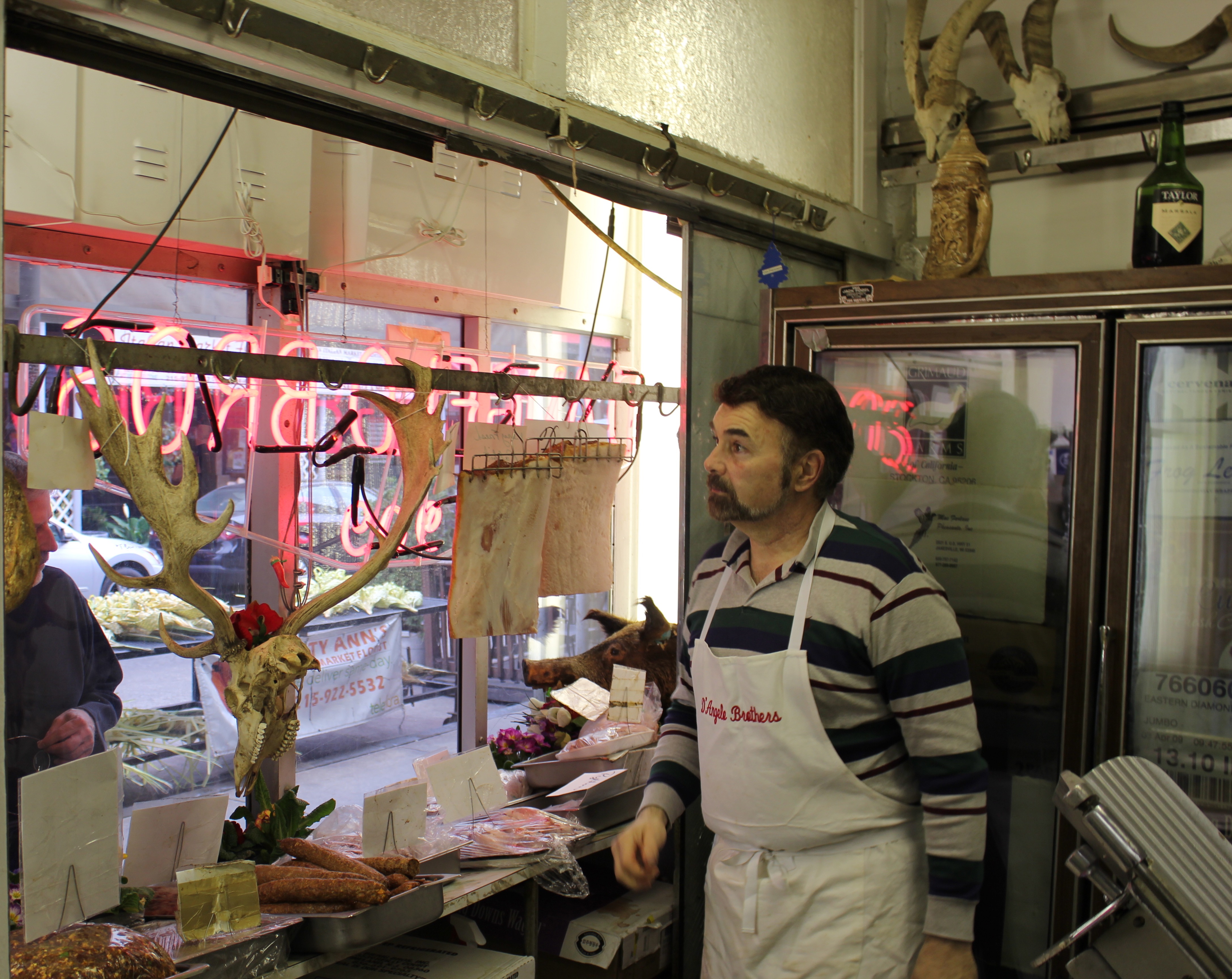
Upon entering D’Angelo Bros., Santo D’Angelo III, “Sonny,” third-generation owner and operator of the business, greeted me. For small talk, I confessed I’ve always seen his business as one of game meat only. I had walked by his shop a thousand times. Always seeing exotic meats in the window, I never thought to go in for the basic such as beef, chicken, pork, or turkey.

Sonny quickly put me in my place: “I don’t specialize in game meat,” he said.”I specialize in great meat.”

Santo D'Angelo III, "Sonny," takes pride in offering high quality products. He sells a variety of meats including exotic, game and domestic—from boar to buffalo, kangaroo to kobe, veal to venison. If he doesn't have what you want, he'll get it for you.

Santo D’Angelo III, “Sonny,” takes pride in offering high quality products. He sells a variety of meats including exotic, game and domestic—from boar to buffalo, kangaroo to kobe, veal to venison. If he doesn’t have what you want, he’ll get it for you. TGG.

According to D’Angelo, the wild boar has a pronounced pork flavor with an undertone of mushrooms. The wild boar is his most popular sausage.

He adds lingonberries and cranberries to this sausage, giving it a slightly sweet taste, which complements the distinct pork flavor. D’Angelo also makes salami and prosciutto from wild boar.

D’Angelo began working in the business over 50 years ago when he was 13 years old.The butcher shop was founded by his grandfather, Santo D’Angelo I, who emigrated from Sicily in 1910. Sonny is quite the expert, being both artist and tradesman of old-world butchery.

“There are butchers and there are meat-cutters,” says D’Angelo. “The butcher is proud of what he sells, and the meat-cutter is simply taking meat out of a box.”

D’Angelo believes the trade is not dead but has come full circle. Supermarkets still pose a threat to the small business, but since the advent of reality-TV cooking shows, young people are actually paying to learn the trade. D’Angelo pointed to the fact that chefs are now celebrities, and thanks to shows like Food Network’s Iron Chef America, men no longer feel ashamed to cook.

Specialty Homemade Sausages

Ada Farrell, of Ambler, Pa., has been shopping at D’Angelo’s for many years. She says bringing D’Angelo Bros.’ specialty sausages is always a crowd-pleaser. She grills the sausages, slices them, and provides a mustard or some other dipping sauce.It doesn’t even matter if the food gets cold.

“By the end of the party the sausages are all gone,” says Farrell.

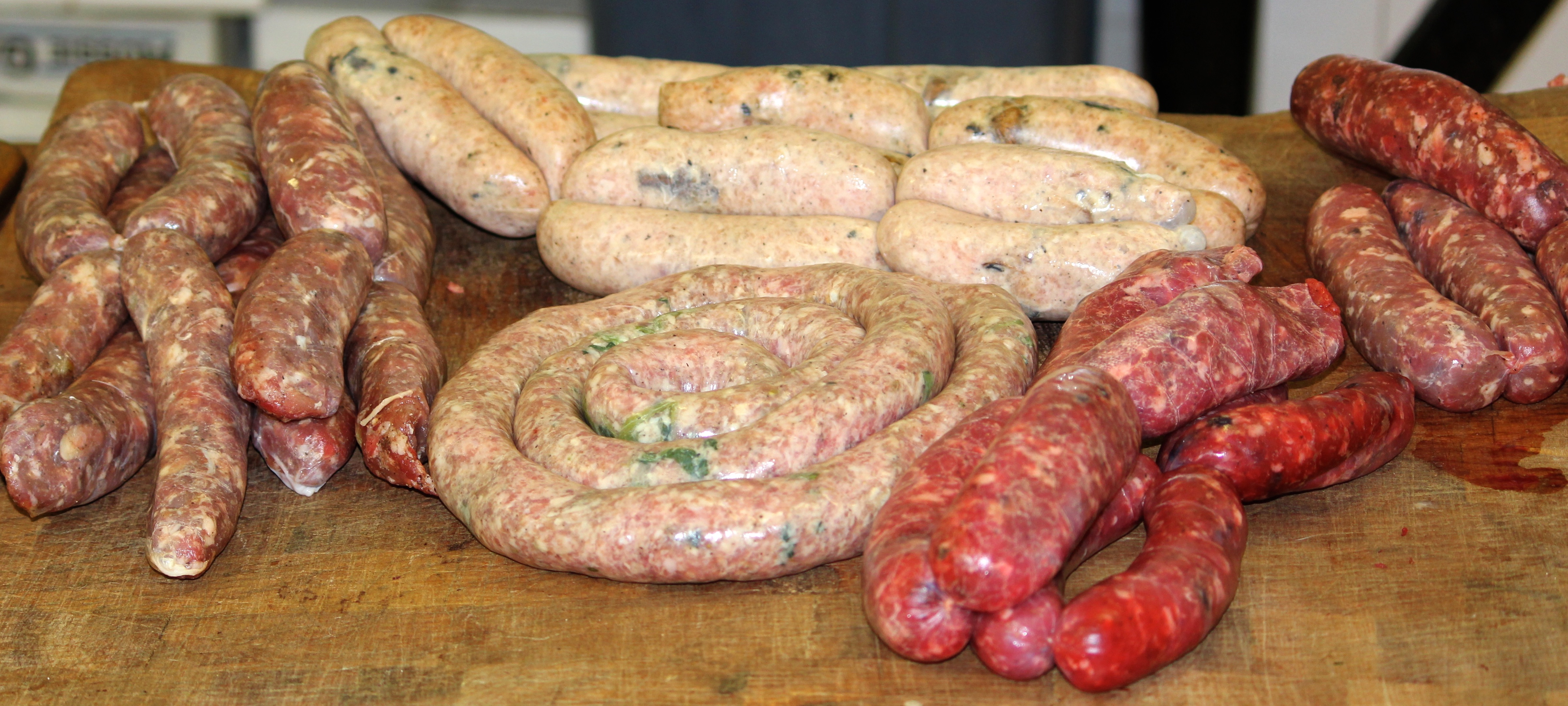
D'Angelo Bros. offer a variety of specialty homemade sausages. Above: Boudin Blanc (chicken with cream and mushrooms), veal and broccoli, wild boar, venison, and duck sausages.

D’Angelo Bros. offer a variety of specialty homemade sausages. Above: Boudin Blanc (chicken with cream and mushrooms), veal and broccoli, wild boar, venison, and duck sausages. TGG.

Farrell loves to surprise her guests. At her next party, she plans on serving grilled ostrich tenderloin and is considering an alligator dish. Aside from the exotic meats, Farrell’s favorite sausage from D’Angelo Bros. is the Lugano, a Northern Italian pork sausage with spinach, pine nuts, and light spices.

She also praises the chicken, saying, “They are small as they should be.”

They are small because D’Angelo does not buy animals that are hybridized for size. D’Angelo buys from local ranchers and farms whenever suitable—that is to say, when ranchers and farmers produce to his standards. According to D’Angelo, all of his products are organic and free-range. He also claims that all of their products are free of antibiotics, hormones and pesticides.

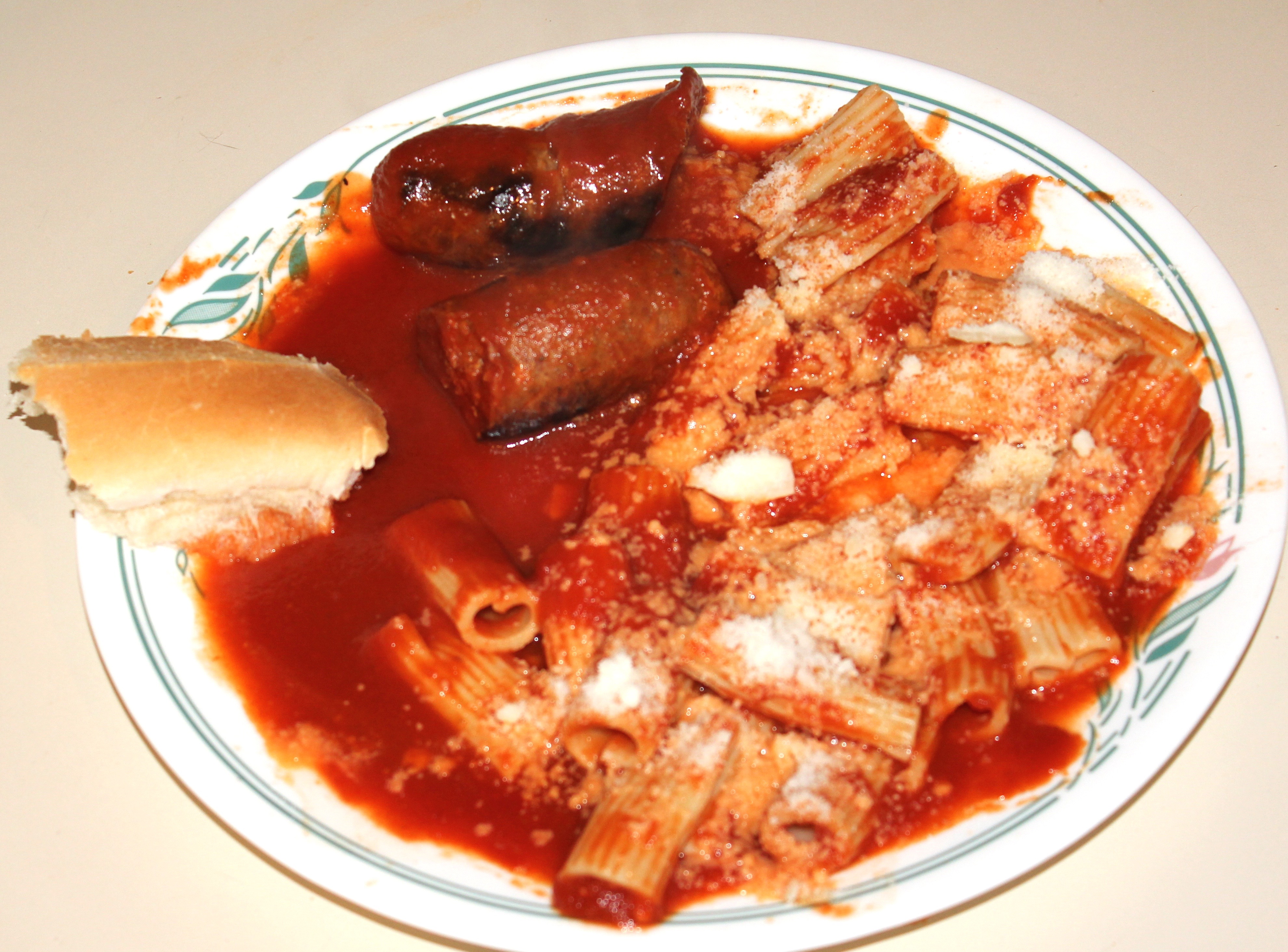
Accustomed to the usual domestic Italian pork sausage, I experimented with D'Angelo Bros.' wild boar sausage instead. Made with lingonberries and cranberries, it adds a distinct taste to the traditional Italian-American bowl of gravy.

Accustomed to the usual domestic Italian pork sausage, I experimented with D’Angelo Bros.’ wild boar sausage instead. Made with lingonberries and cranberries, it adds a distinct taste to the traditional Italian-American bowl of gravy. TGG.

The shop’s game meat is relatively healthy: It is high in protein and nearly absent of fat. D’Angelo says the difference between game meat and domestic meat is that on game meat, the fat is exterior and can be cut off, whereas with ordinary beef, the fat is marbled throughout the cut and cannot be removed.


Higher Quality, Higher Prices

D’Angelo Bros.’ products are more expensive than meats from the local supermarkets. D’Angelo notes that good products cost more than lower quality products.

“Cheap prices mean cheap products,” he says. “Would you rather drive a Mercedes or a Hyundai?”

Nick DiBello, from Our Lady of Cavalry Parish in Northeast Philadelphia, has been shopping at D’Angelo’s for over 10 years. DiBello, owner of Nu-Look Car Wash, says that he’s not rich but his passion in life is food, so he doesn’t mind spending a little extra money.

“You get what you pay for,” says DiBello.

D'Angelo has been in the business for over 50 years. He's not only a tradesman butcher but also a talented painter and the author of two cookbooks: "And Now We Call It Gravy" and "Are You Game?"

D’Angelo has been in the business for over 50 years. He’s not only a tradesman butcher but also a talented painter and the author of two cookbooks: “And Now We Call It Gravy” and “Are You Game?” TGG.

He also notes that no one else around sells the products D’Angelo Bros. carry. Some of DiBello’s favorites are the Colorado lamb, which he says is better than the New Zealand lamb, and the Kobe steak. DiBello often grills his meats with a white truffle oil and cracked black pepper and light salt. He trusts the quality of D’Angelo Bros.’ products, and he appreciates the special care that D’Angelo provides. When DiBello ordered veal tenderloin, D’Angelo aged it for him.

“You can’t get his quality at the supermarket,” says DiBello.

D’Angelo Bros. is located at 909 South 9th St. For more information, visit http://dangelobros.com.

Standard
Beer, Cleveland, Microbrewery

Great Lakes Brewing Company—A Diamond in the Dark


CLEVELAND—I don’t recall when, where or how I was introduced to Great Lakes Brewing Company. However, I’ve been an ardent fan for well over a year now. I feel that GLBC has an unmatched respect for their customers as well as their products. In an age where brewers are not mandated to list ingredients on beer labels, GLBC does so voluntarily. GLBC also states on each beer label that they do not use chemicals or preservatives. Additionally, on each beer label they provide the Alcohol By Volume (ABV), which gives the customer more power to choose wisely. To me providing the consumer with this basic information is helpful as well as respectful. To boot, GLBC makes acclaimed, high-quality, and all-natural beers.

The Holiday Excursion

Anticipating the coming Holiday mayhem in early December, I felt the need to escape the city. I heard in my dreams the Midwest Brewer’s daughter calling, and so I made a reservation for a tour at my favorite brewery: Great Lakes Brewing Company in Cleveland, Ohio. After the usual traffic leading up to King of Prussia on 76 West, it was smooth sailing. I checked into the Hampton Inn in downtown Cleveland around 5:30 pm. Had I synchronized my fueling and eating, I would have gotten there perhaps an hour sooner. Being an unabashed yet careful city-walker, I asked the ladies at the concierge desk where to go and where to avoid. Taking their advice, I hit the street and began walking across town. On the Veterans Memorial Bridge, it was chilly. I underestimated the weather, and did not bring a hat to cover my ears. The pain in my ear canals became an alarming sensation.

IMG_3027

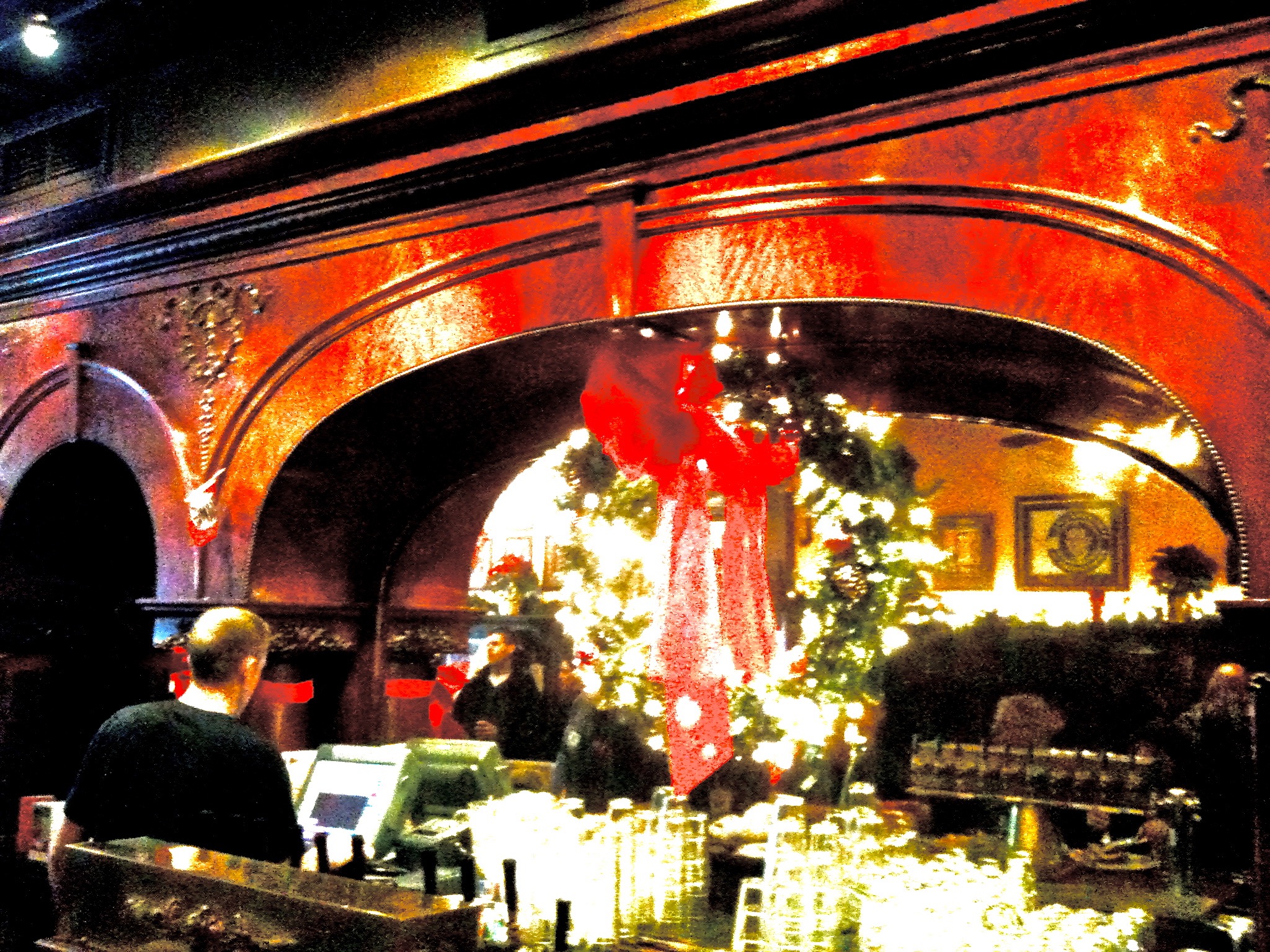
Great Lakes Brewing Company restaurant bar, adorned with beautiful woodwork and a Christmas wreath, has a warm, intimate feel. TGG.

Once I crossed the bridge, I was lost. The streets were run-down, dark and uninviting. Fortunately, there was a restaurant nearby. I knew I needed to walk towards Carnegie Avenue, and so I stepped into the restaurant and asked where Carnegie was. “Car-NAY-gee?” the host corrected me as I seemed to have grossly mispronounced the name. He pointed me in the direction and I pounded the street for a few more minutes before finding comfort on 25th Street, which was a somewhat lively area with a strip of bars and restaurants. Finally, I stumbled upon what I had come for: Great Lakes Brewing Company.

The bar was packed with people but not uncomfortably. GLBC had a warm, intimate feel. The interior of the bar, adorned with beautiful woodwork and tasteful self-advertising posters, is classy but not pretentious. After a few moments, it dawned on me that there was either no music playing or that it was so low that I believed music was entirely absent. All that was heard was the soothing racket of entertained patrons.

The Suds

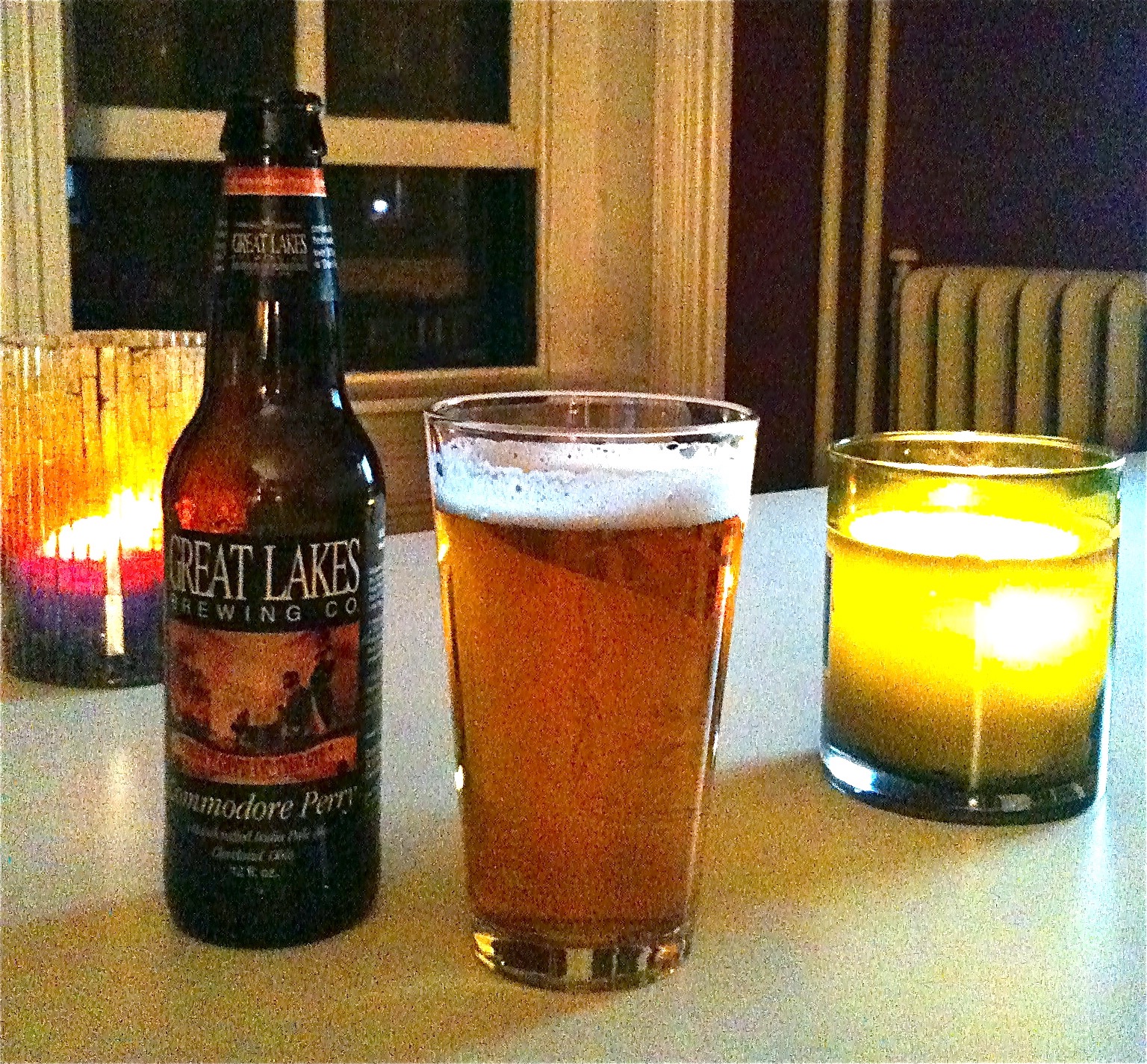
A most handsome beer: Commodore Perry IPA.

A most handsome beer: Commodore Perry IPA. Also, not too hoppy for those who prefer a modestly hopped brew. TGG.

Before ordering food, I tried a beer that was unfamiliar to me called Highlander Scottish Ale (4.6% ABV). It is a pub-exclusive beer that unfortunately is not distributed to PA. Their popular, award-winning beers, which are available in Pennsylvania, are the Edmund Fitzgerald Porter (5.8% ABV), Elliot Ness Amber Lager (6.2% ABV), Dortmunder Gold Lager (5.8% ABV), Burning River American Pale Ale (6.0% ABV). The above mentioned beers have won numerous awards over the past two decades; they can all be conveniently purchased in a a single variety case. Also, available in Pennsylvania is the Commodore Perry IPA (7.5% ABV).

The Grub

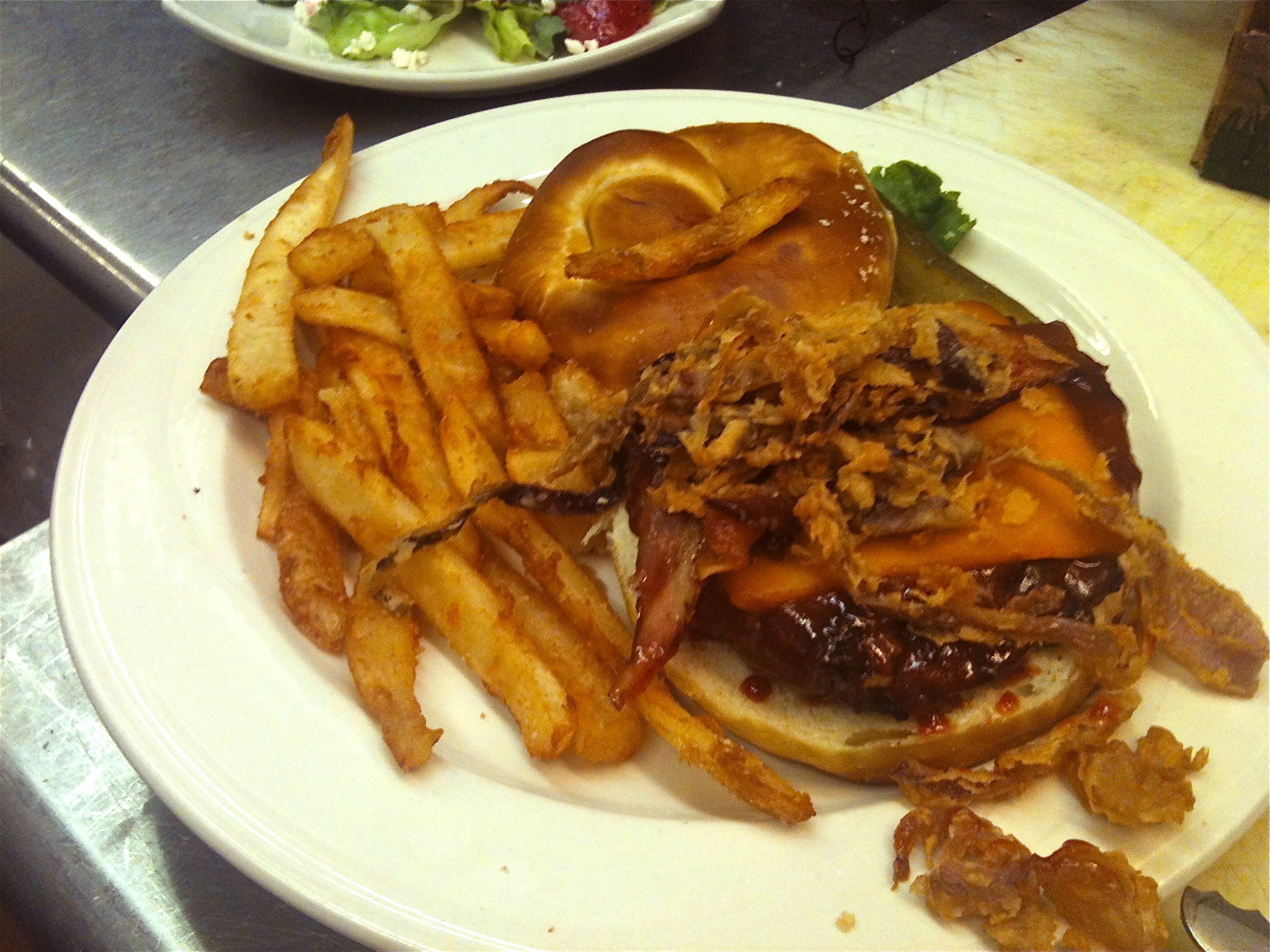
A little something to whet the appetite—GLBC's Old World Burger with smoked cheddar, bacon, fried onion straws, and housemade Edmund Fitzgerald Porter barbecue sauce on a pretzel roll.

Something to whet the appetite—GLBC’s Old World Burger with smoked cheddar, bacon, fried onion straws, and housemade Edmund Fitzgerald Porter barbecue sauce on a pretzel roll. TGG.

The time came to judge the place on its grub. Personally, I feel that a bar should always have a solid burger. I kept my order simple so I could rightly judge. I got a basic cheese burger to avoid any interference from outlandish additions. What stands out in my mind to this moment is the freshness and tenderness of the beef. It was one of the most succulent burgers I have ever had. GLBC gets their beef patties ground daily from a purveyor called Lance’s Beef at the West Side Market, which is just around the corner from the bar.

To wash down my cheese burger, I had the Elliot Ness Amber Lager, which is a smooth, malty beer. I am usually not a fan of the lager style, but this distinct lager has actually become my beer of choice; it is a crisp, flavorful, mature beer—and to put it simply: really awesome. Once my belly was full, I stepped up to the seasonal Christmas Ale (7.5% ABV). This beer is brewed with honey, ginger and cinnamon and is outright amazing. This holiday ale is not too sweet, not too hoppy, nor too bitter; it is a pleasant, delicious ale that will, without doubt, delight the spirit.

Brewery Tour – (A) Room For Improvement

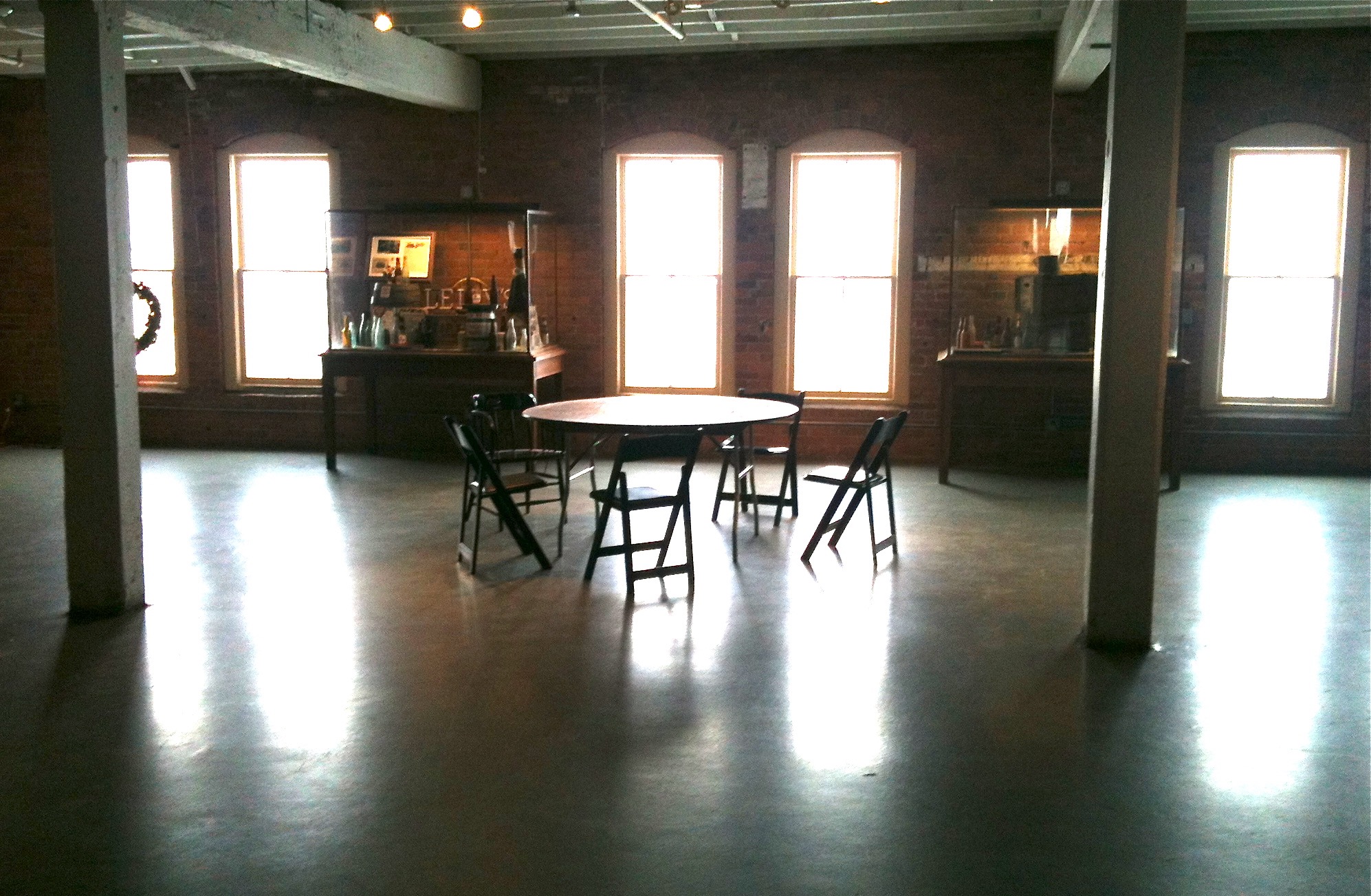
Perfect for a movie-showing.

Perfect for a movie-show room or a cigar bar. TGG.

The tour was an hour long, and if I might add, somewhat unexciting. The tour guide dished out a lot of information about beer-making and some facts about GLBC, but overall it was forgettable. Of course, I mean no offense to the guide in any way. My preference is simply to hear less talking.

I do think there is room for improvement. I suggest providing literature and showing a movie highlighting GLBC’s history, mission, and daily operations. Any literature that could be provided, would be better than relying alone on a guide’s speech. A hand-out detailing the beers would be a great keepsake that visitors could take home, and show to others. I might add that inside the brewery is a big empty room where a bar had once been. That room is a perfect spot for a quick movie-showing.

What Really Matters

Great Lakes Brewing Company was Ohio's first microbrewery.

Great Lakes Brewing Company was Ohio’s first microbrewery. TGG.

GLBC does an excellent job with the things that really matter, such as making superior beer, supplying awesome food, and providing an enjoyable, friendly atmosphere, all of which bring a variety of appreciative people together to celebrate at Great Lakes Brewing Company. Additionally, GLBC is a socially- and environmentally-minded brewery that is committed to the community and the environment. According to their website, they are engaged in numerous sustainability projects including water conservation, waste reuse, local foods and farming, energy efficiency, and bio-fuels to mention a few.

Aside from their great products and their thoughtful philosophy, the good nature of the Great Lakes Brewing Company Staff also left a great impression with me. The bartenders, hosts, and guide were attentive, accommodating, and courteous, making my solo Christmas getaway vacation an entirely special treat.

Standard
Italian Food, Sausage, South Philly Italian Food

Making Sweet Italian Sausage, Fiorella Style

Over 100 years of family business and artisanship

PHILADELPHIA — Not knowing Dan Fiorella’s trade, I always labeled him a butcher.

To be certain, I asked him what his title was, and he stated simply, “Sausage-maker.”

Still not convinced, I asked him outright if he was a butcher. He humbly denied that position, but said he could dissect a pig if the need arose.
Dan and Trish Fiorella are fourth-generation sausage-makers. For more than 30 years The've provided Philadelphia and the surrounding area with arguably the best Italian sausage in the world.

Dan and Trish Fiorella are fourth-generation sausage-makers. For more than 30 years The’ve provided Philadelphia and the surrounding area with arguably the best Italian sausage in the world. TGG

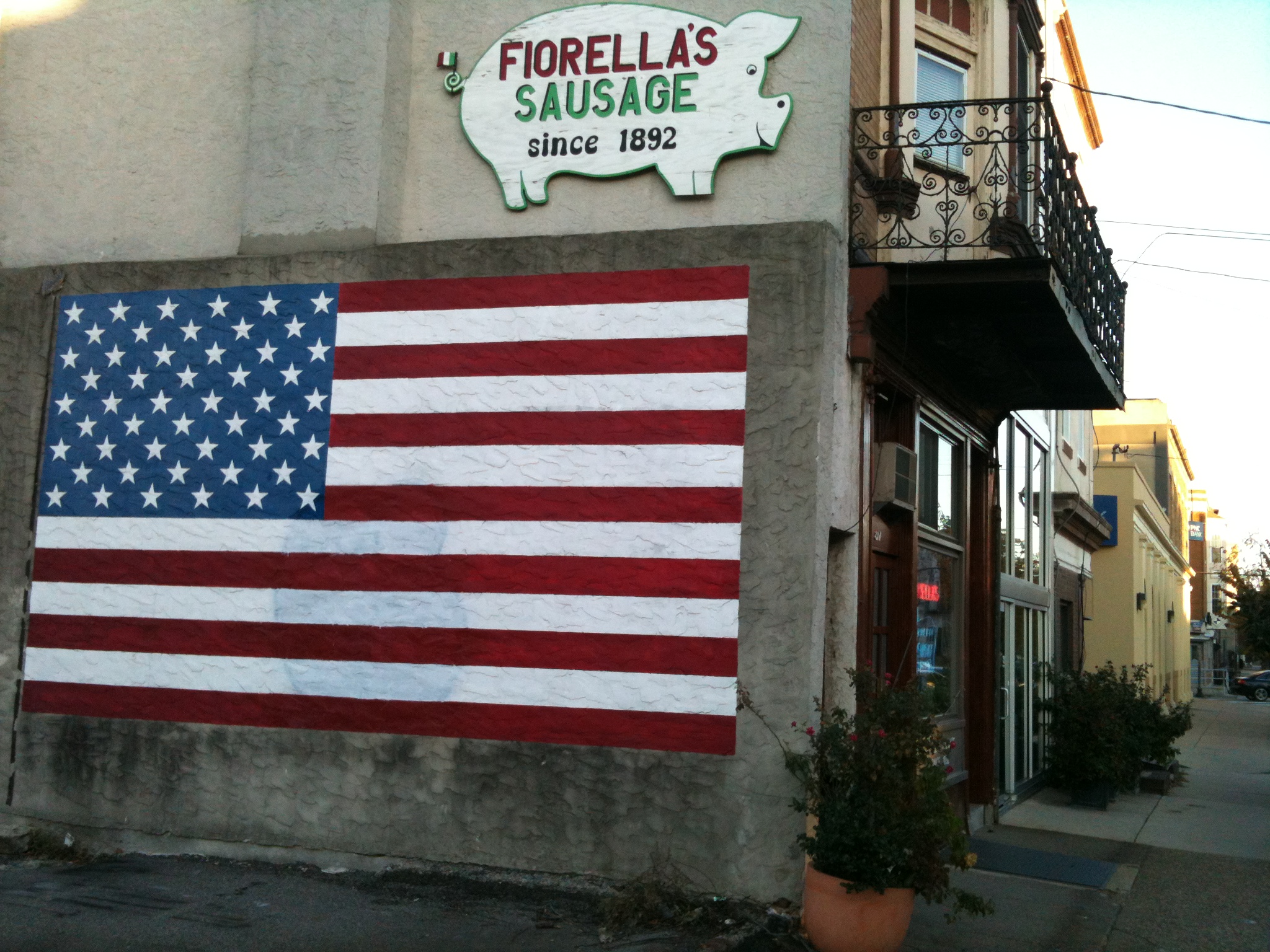
Dan is the great grandson of Luigi Fiorella. Luigi, the founder of Fiorella’s Sasuage, emigrated to Philadelphia in 1892 from Foggia, a city in Southern Italy’s Apulia region.

Dan began his career in the sausage-making trade in 1966 after graduating from West Philadelphia’s, now-defunct, Saint Thomas More High School. With his wife, Trish, a South Philly native from Saint Richard’s parish, they run the daily operation of a family business that officially began 119 years ago. Dan and Trish are the fourth generation making a living by providing Philadelphia with some of the best Italian sausage in the world.

Breakfast Sausage—City-style
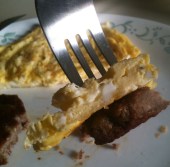
The Fiorella's breakfast sausage is called "country-style" and not "country" because their business is located in the city.  Trivarelli, TGG.

The Fiorella’s breakfast sausage is called “country-style” and not “country” because their business is located in the city. TGG.

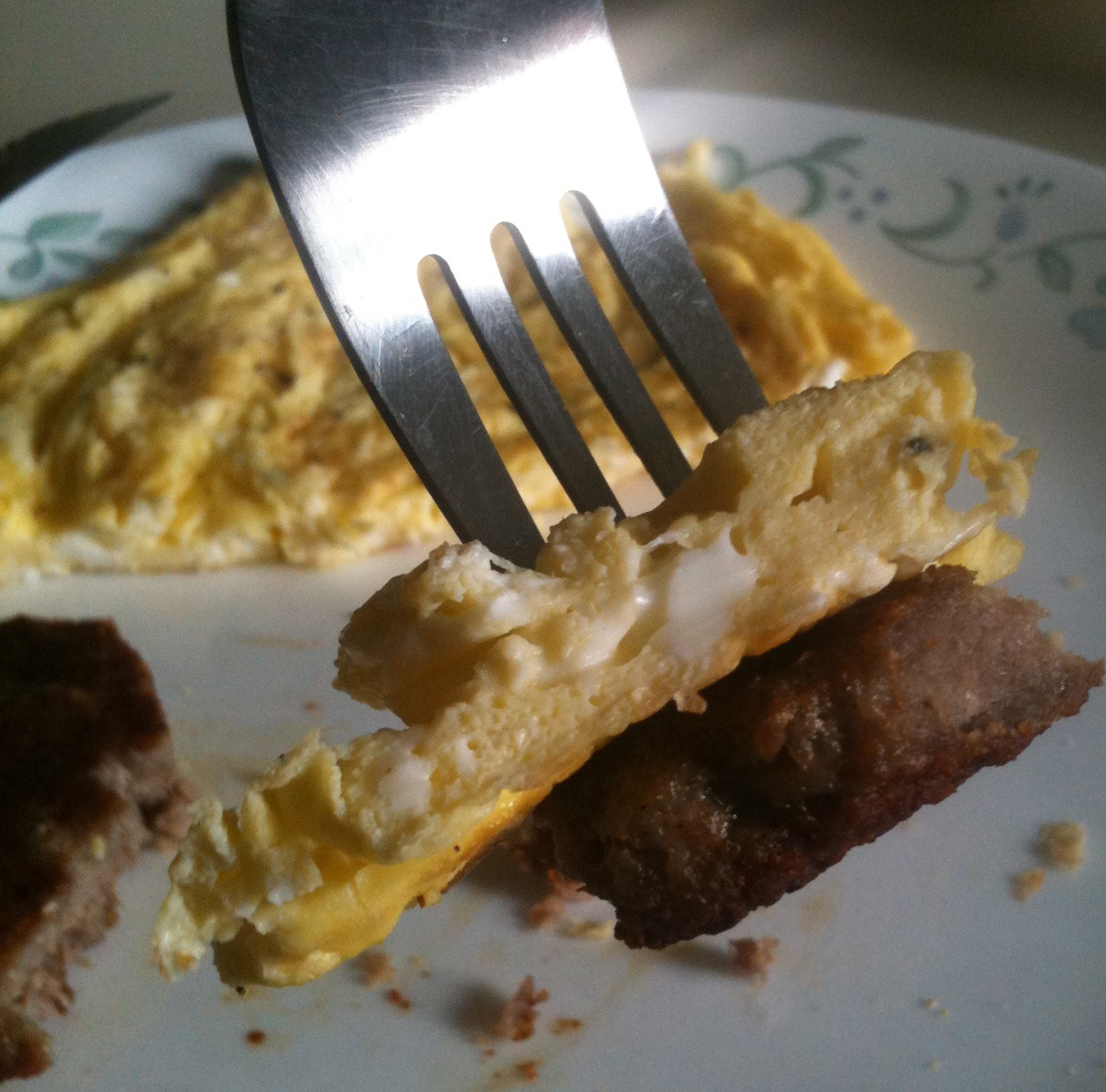
As a true breakfast lover, I take notice of specialties in the sphere of morning victuals. To my palate, Fiorella’s breakfast sausage is the tastiest sausage around. I admit to what might amount to a small bias. My earliest food memory is of my grandfather helping me fork a morsel of scrambled eggs on top of a bite-size portion of Fiorella’s breakfast sausage. The combination of eggs and sausage creates a mouthful of immensely delicious and complementary flavors.

When I was a young boy still learning to use a fork, Fiorella’s breakfast sausage was a new innovation, developed by the family in the mid-1970s. The experiment started by dividing 20 pounds of sausage among five people: Dan, Dan’s father, Lou, his brother, Eddie, Dan’s cousin, Richie, and a close friend, Eddie Penna.


After about three months of trial and error and upward of 10 attempts, the family decided on a recipe. Because it is more cost-efficient, they use breakfast sausage seasoning from a spice company in New York.
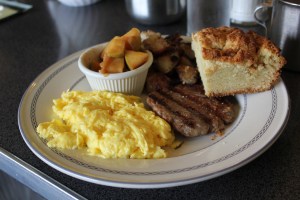
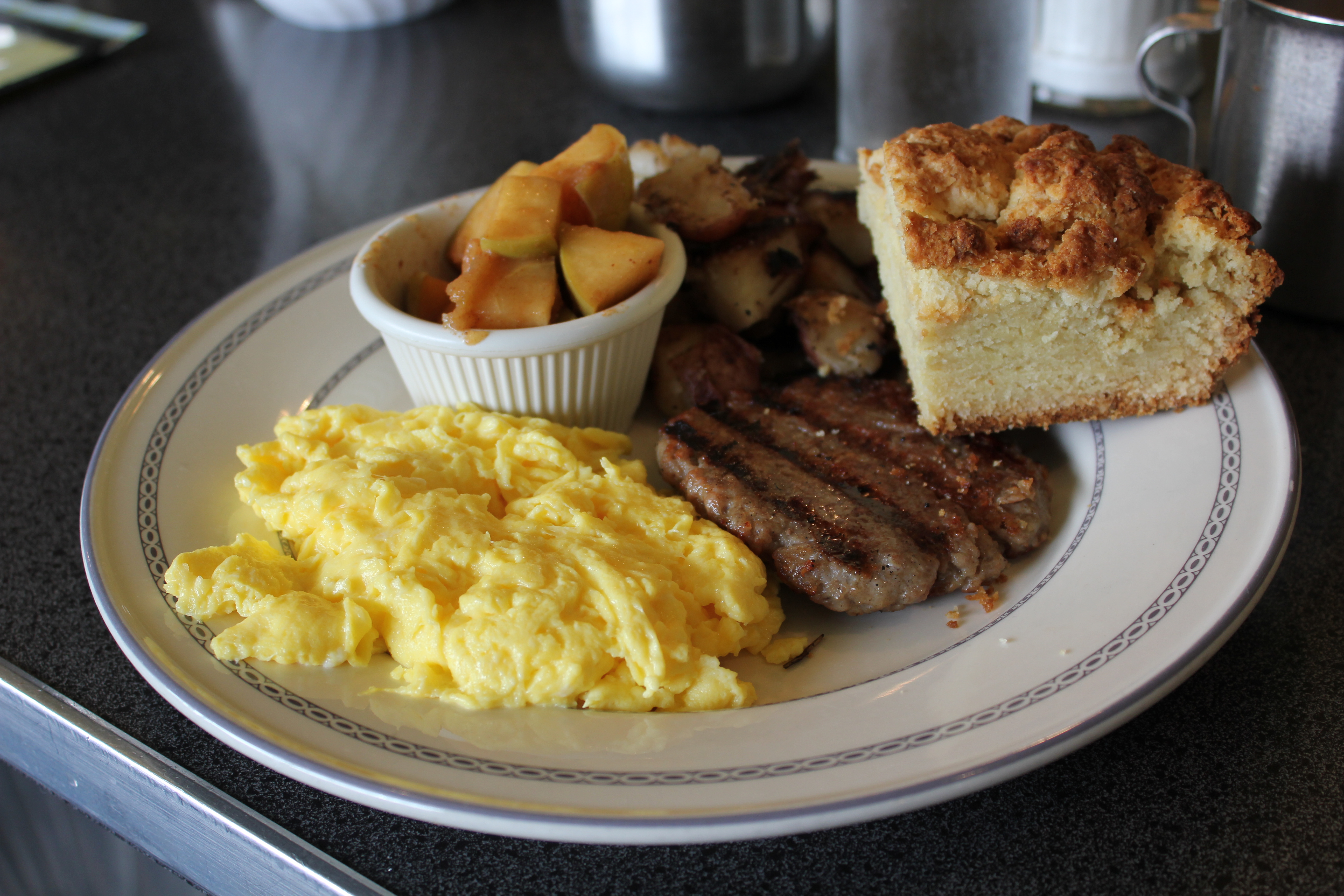
Sam's Morning Glory Diner offers Fiorella's breakfast sausage pictured here with scrambled eggs, potatoes, apple compote and a biscuit. Trivarelli, TGG.

Sam’s Morning Glory Diner offers Fiorella’s breakfast sausage pictured here with scrambled eggs, potatoes, apple compote and a biscuit. TGG.

The Fiorellas sell their  breakfast sausage as links or patties. I prefer the patty because it doesn’t roll around in the pan when frying. The patty is a thing of simplicity and versatility; it is great as part of a platter, accompanied by eggs, potatoes and toast, but it is especially suited for breakfast sandwiches. Each patty weighs one-quarter pound before cooking. If you prefer to eat lighter, the links would be the wiser choice.

In my young, formative brain Fiorella’s breakfast sausage perhaps created millions of pleasant synaptic connections when I was a child. Yet despite my strong connection to their creation, I always seek breakfast sausage that is worthy of competition, not only to see how their competition fares but also in search of variety. So far, I have found nothing that compares.

Beyond Breakfast: Liver, Sweet, Hot, and Provolone
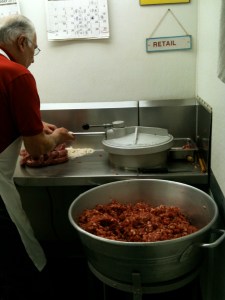
Making sausage by hand from a 50-pound drum. The Fiorellas make approximately 250 pounds daily. Trivarelli, TGG.

Making sausage by hand from a 50-pound drum. The Fiorellas make about 250 pounds daily. TGG.

Dan and Trish adhere to the original old-world recipes with one exception: the liver sausage. This recipe comes from Luigi’s wife, Antoinette Fusco. Originally, the recipe called for whole cloves of garlic. However, the whole cloves have been replaced with powdered garlic, an obvious improvement as granulated garlic actually blends with the other ingredients.

Despite the fact that liver has nearly vanished from the American cuisine, they routinely sell about 50 pounds per week. During the Christmas Holiday, the demand for liver sausage increases drastically.

Fiorella’s more popular sausages are sweet Italian, hot Italian, and Provolone cheese sausage. They spice their sausages very simply with salt, black or red pepper, and with or without fennel. The provolone cheese sausage is intensely flavorful. Claudio Specialty Foods, located near Fiorella’s at 924 South 9th Street, provides the provolone.
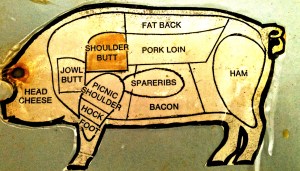
The shoulder butt, or the Boston butt, is the Fiorellas choice cut. They use it for all their products. Diagram courtesy of the Fiorellas. Trivarelli, TGG.

The shoulder butt, or the Boston butt, is the Fiorellas choice cut, which they use for all their products. Diagram courtesy of the Fiorellas. TGG.

Fiorella’s prize sausage, in my opinion, is the sweet Italian with fennel. No sausage fits more perfectly in a bowl of gravy and meatballs than this sausage. Their sweet is the exemplary sausage that keeps the Italian tradition thriving in South Philly.

According to Dan, the Fiorellas have a superior product because they use only the best cut of meat and top-grade casing. Their choice cut for all of their products is the pig’s shoulder butt. Also called the Boston butt, The shoulder butt is from the upper part of the hog’s shoulder. Dan says this cut is the leanest and most tender part.

Fiorella’s pork is purchased from Leidy’s, a part of ALL Holding Company of Souderton, Pennsylvania. Leidy’s delivers between 200 to 300 pounds of shoulder butts to Fiorella’s per day.
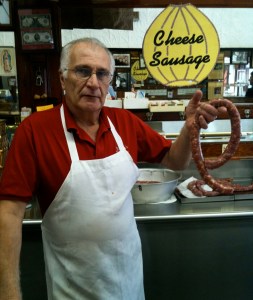
Sausage made with natural casing has a natural curve. Trivarelli, TGG.

Sausage made with natural casing has a natural curve. TGG.

And then there is the casing. The natural casings that  the Fiorellas use are either pig or lamb intestinal lining. Artificial casing is, in Dan’s words an “edible plastic.”

Adamant about using only natural casing, Dan says, “You can tell the difference by the curve.” He says a natural casing maintains its curve. An artificial casing is often straight.

The Fiorellas buy their natural casings from Quality Casing Company in Cincinnati, Ohio.

The texture of their sausage, which is noticeably thick and flaky, is another aspect that puts Fiorella’s sausage above many of its competitors. Dan credits the thick texture to his use of a quarter-inch grinder hole. He says that most sausage-makers grind their pork with finer holes because it is easier to hide the fat.

The Future of Fiorella’s Sausage

Fiorella's Sausage, located near the Italian Market at 817 Christian Street in South Philly. Trivarelli, TGG.

Fiorella’s Sausage, located near the Italian Market at 817 Christian Street in South Philly. TGG.

Fiorella’s Italian sausage is the best of its kind in the United States, which by right must make it a top contender for world’s best Italian sausage. The family business is now in its 119th year, but unfortunately, there are no fifth-generation sausage-makers in the Fiorella family.

Fiorella’s Italian sausage is likely the best of its kind in the United States, which must make it a top contender for world’s best Italian sausage. The family business is now in its 119th year. Unfortunately, there are no fifth-generation sausage-makers in the family.

Life without Fiorella’s sausage is hard to imagine. Their business seems vital to the community and the Italian culture of Philadelphia. With the rise of independent bakeries, coffee shops, and other such small businesses, I hold out hope that someone will buy their business when Dan and Trish retire.

I asked Dan if he would make any stipulations to ensure that a potential buyer adheres to their recipes. He said he would not, but questioned, “Would you mess with success?”

Let’s hope if the name is ever sold that the same effort and pride are put into the product as has been the case for more than a century.


Standard